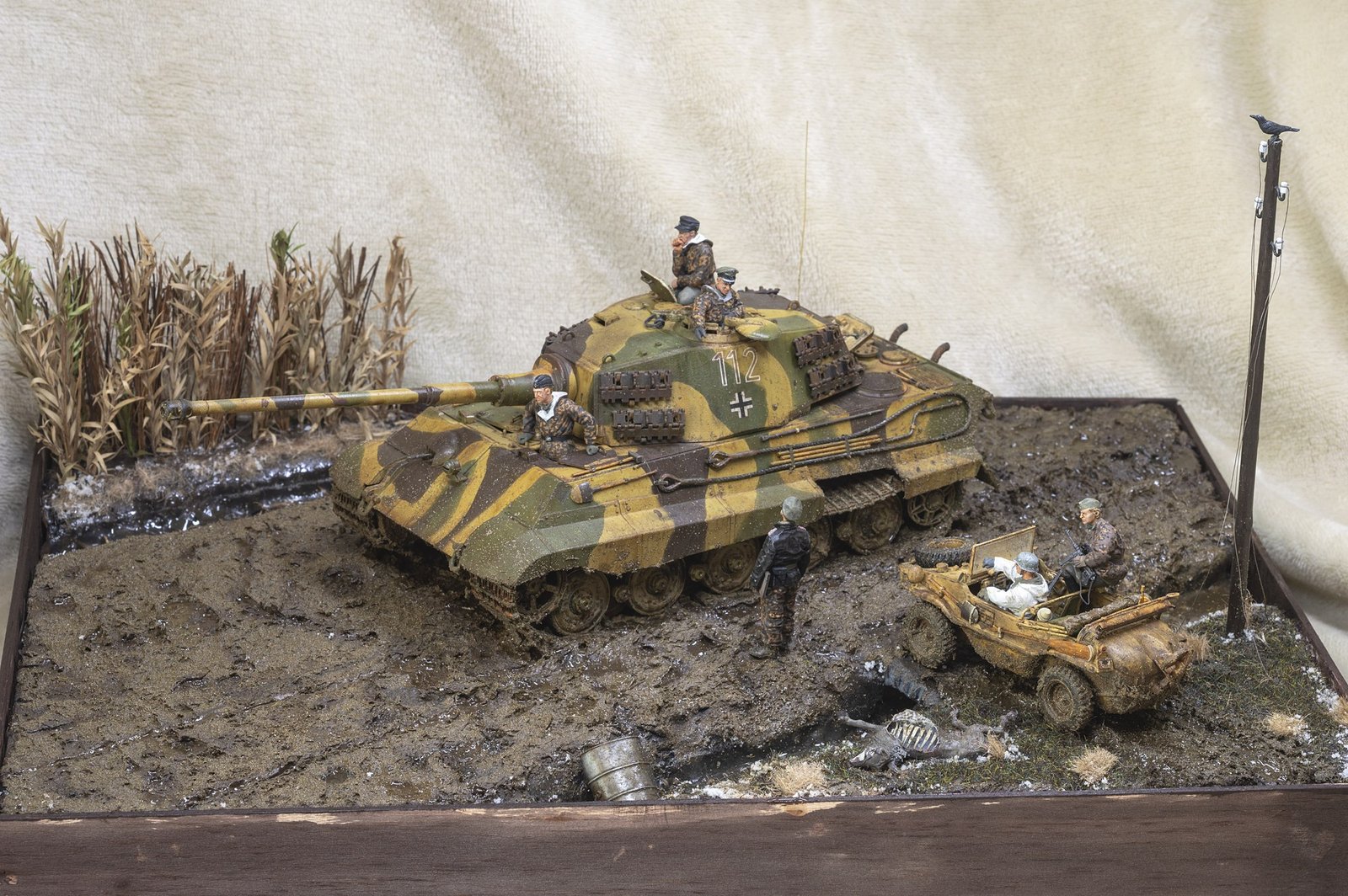
Frühlingserwachen, Hungary March 1945

Frühlingserwachen, Hungary March 1945

Withdrawal of SS Heavy Tank Battalion 501, Kampfgruppe Kling

TheatreEastern Front
Period1945
StatusFinished

The scene

March 1945, western Hungary, west of the Danube and north of Lake Balaton.
Operation Frühlingserwachen — "Spring Awakening" — was the last German offensive
of the war, and within days it had collapsed: the thaw turned the plain into a
mire where heavy tanks simply bogged down.

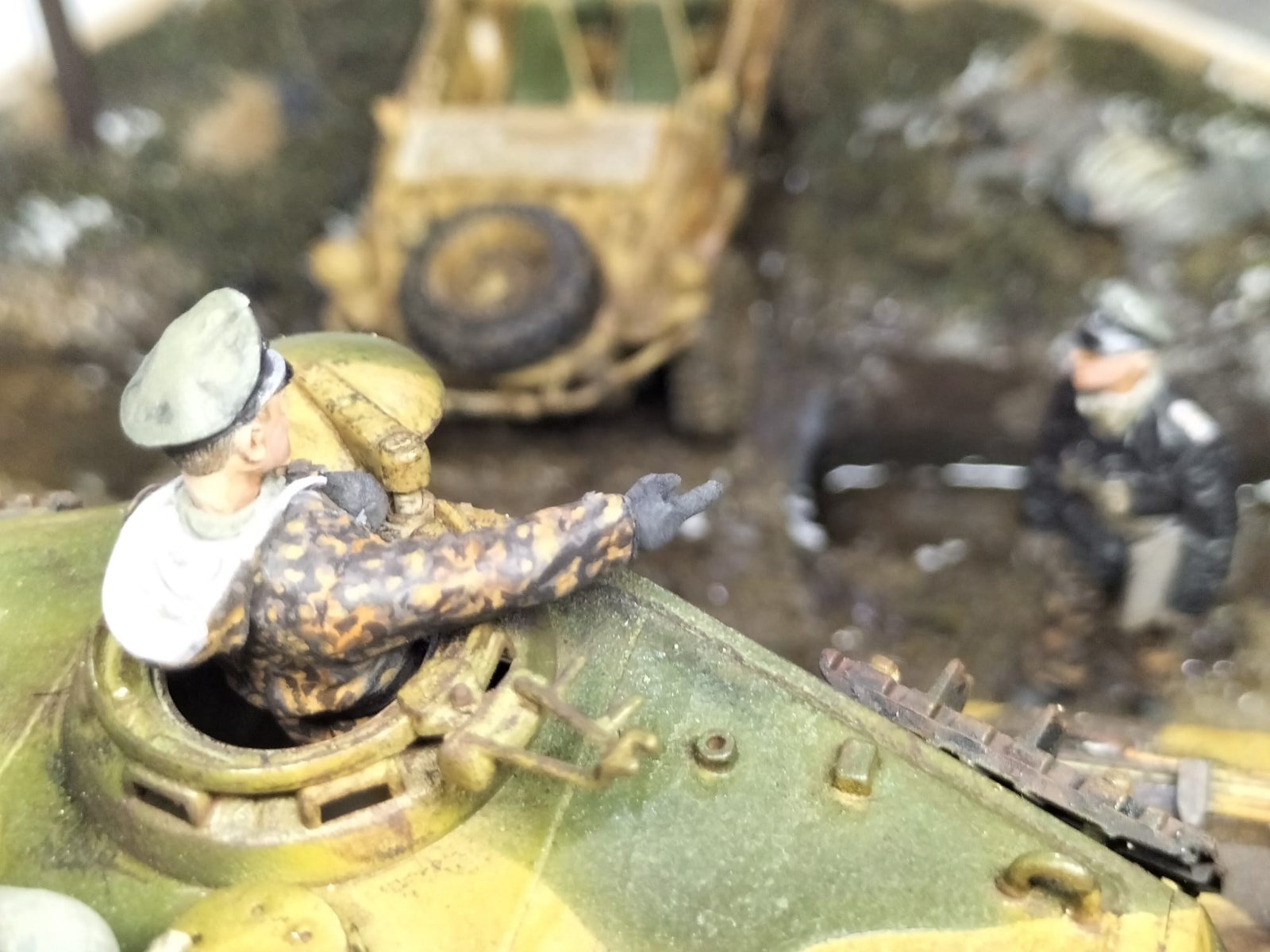
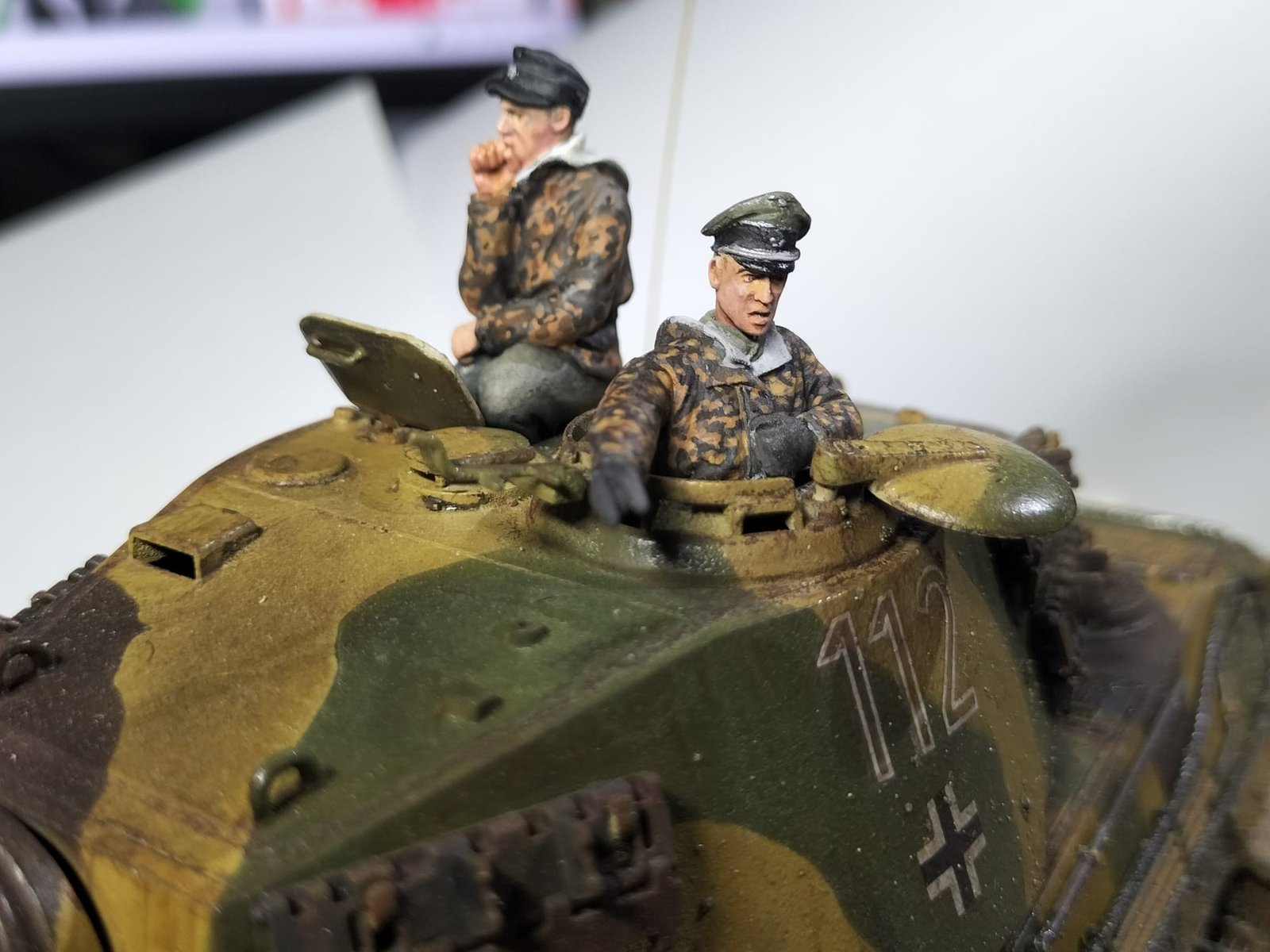
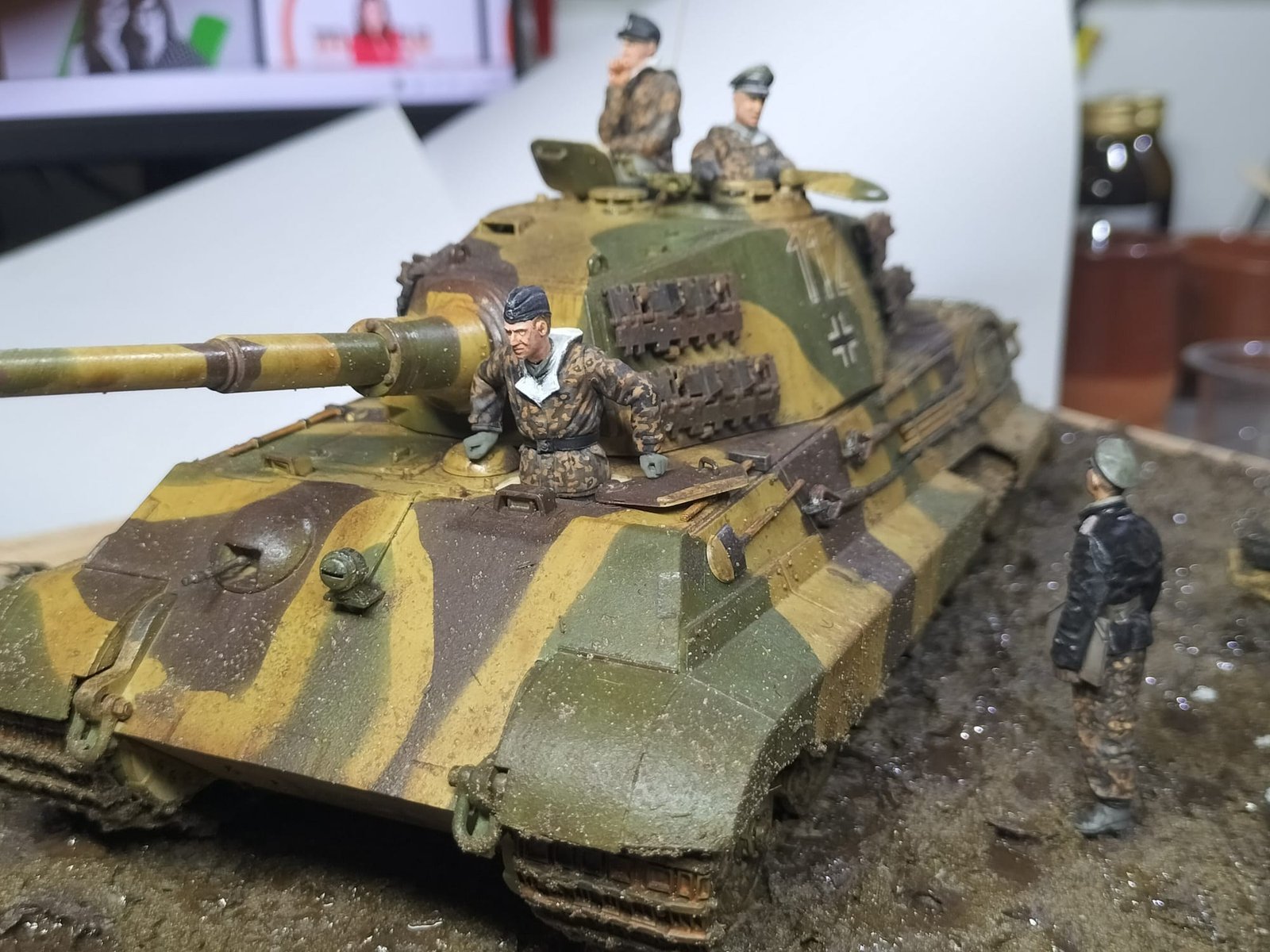
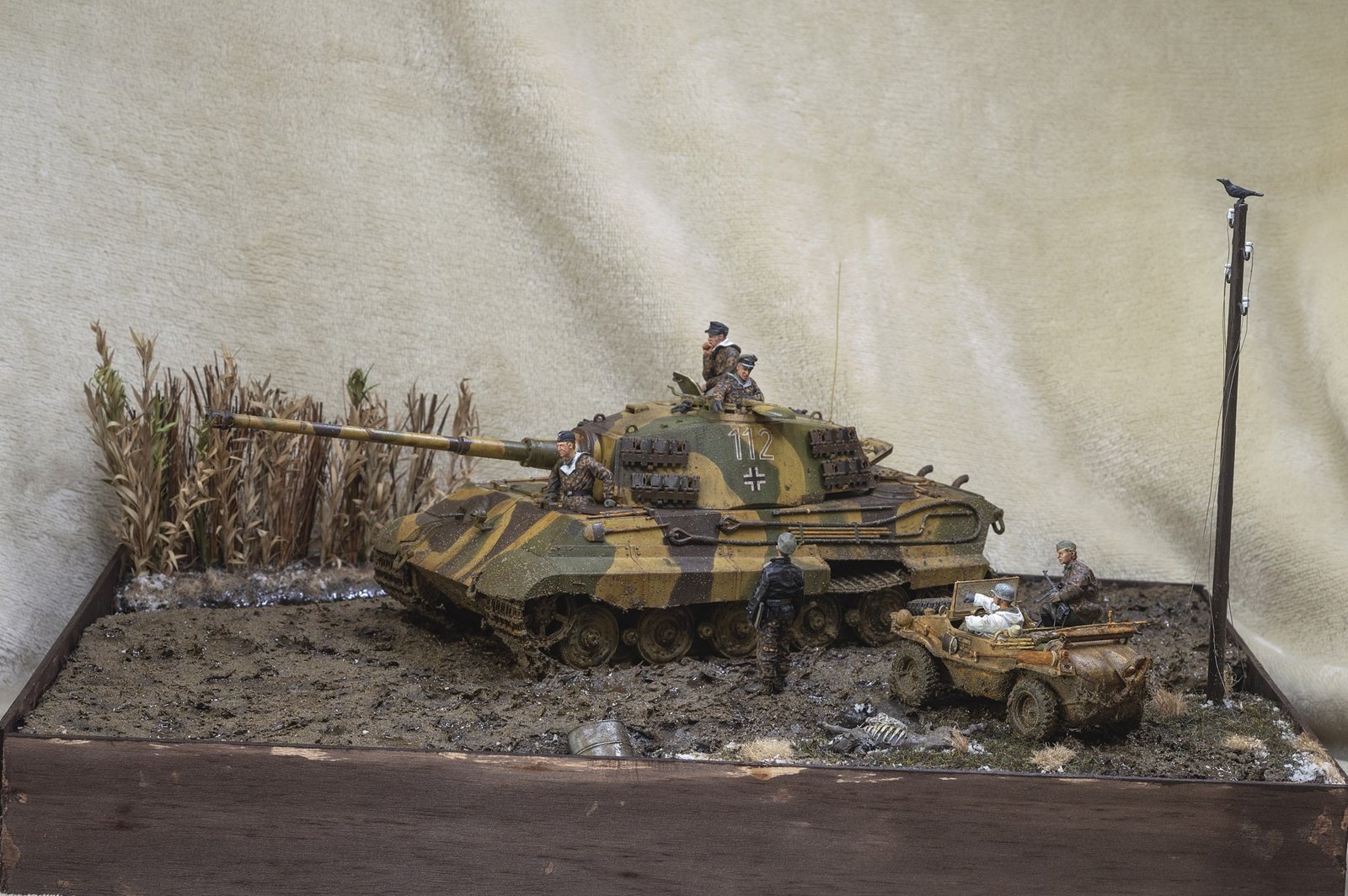
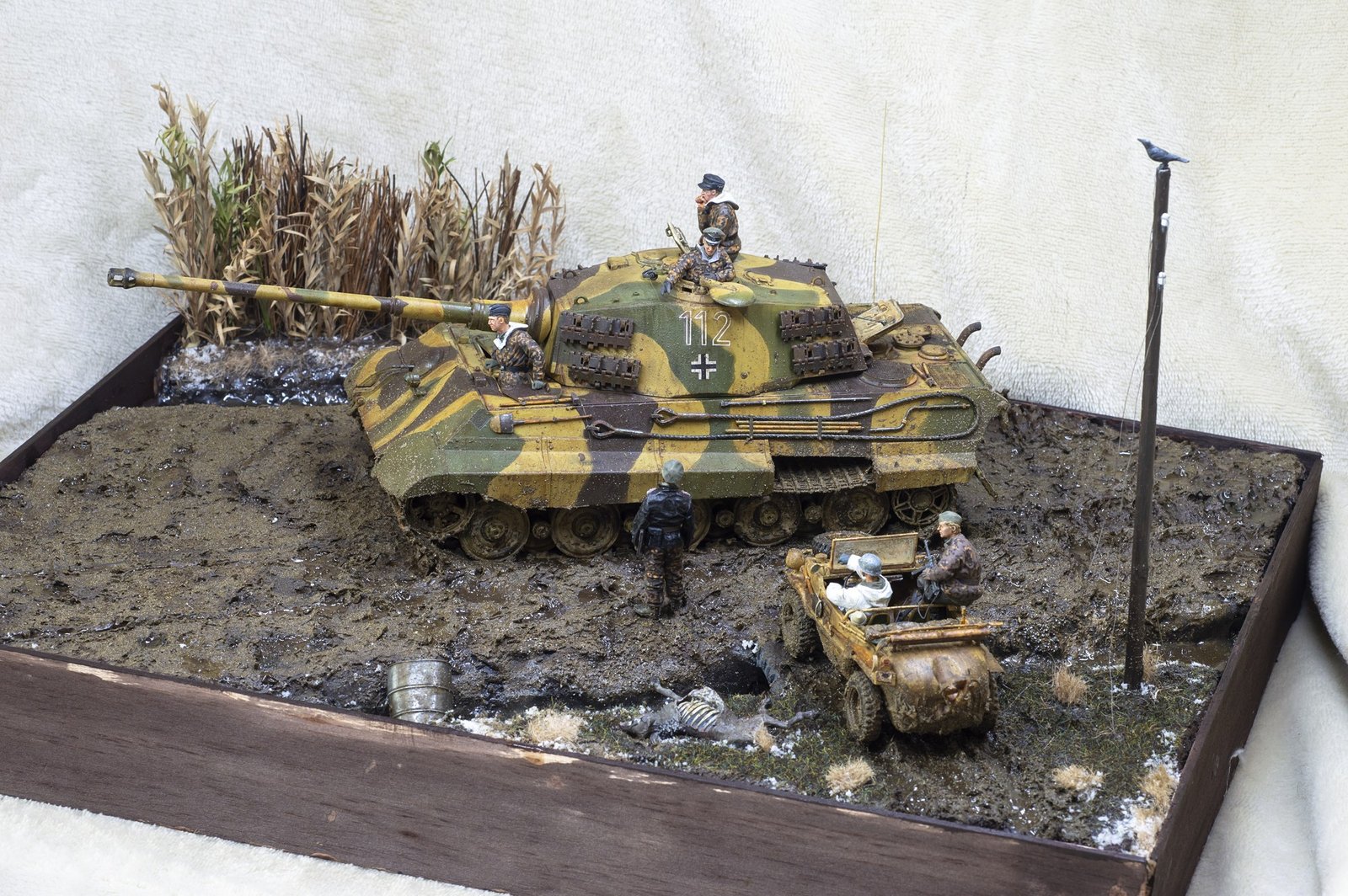
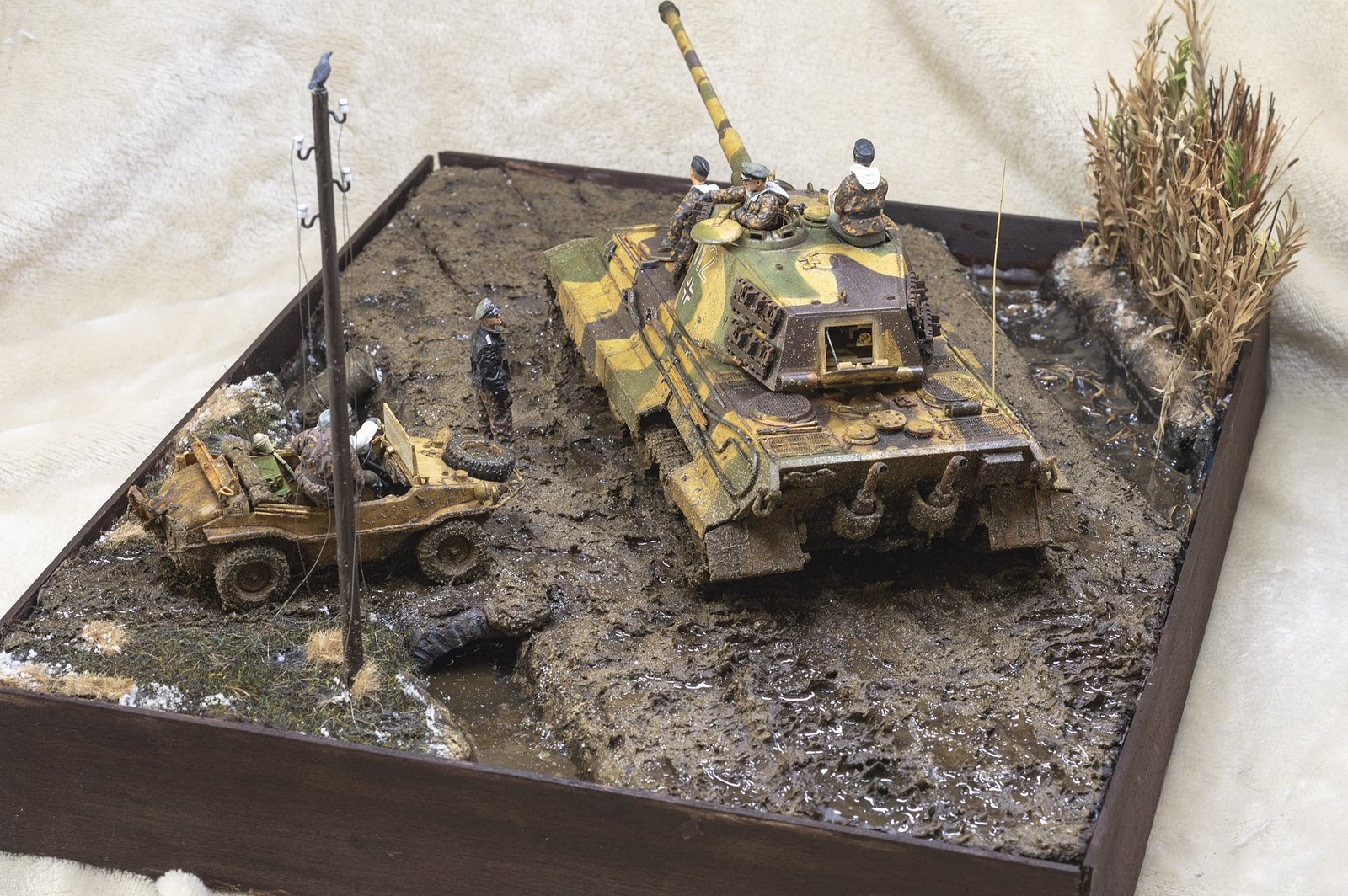
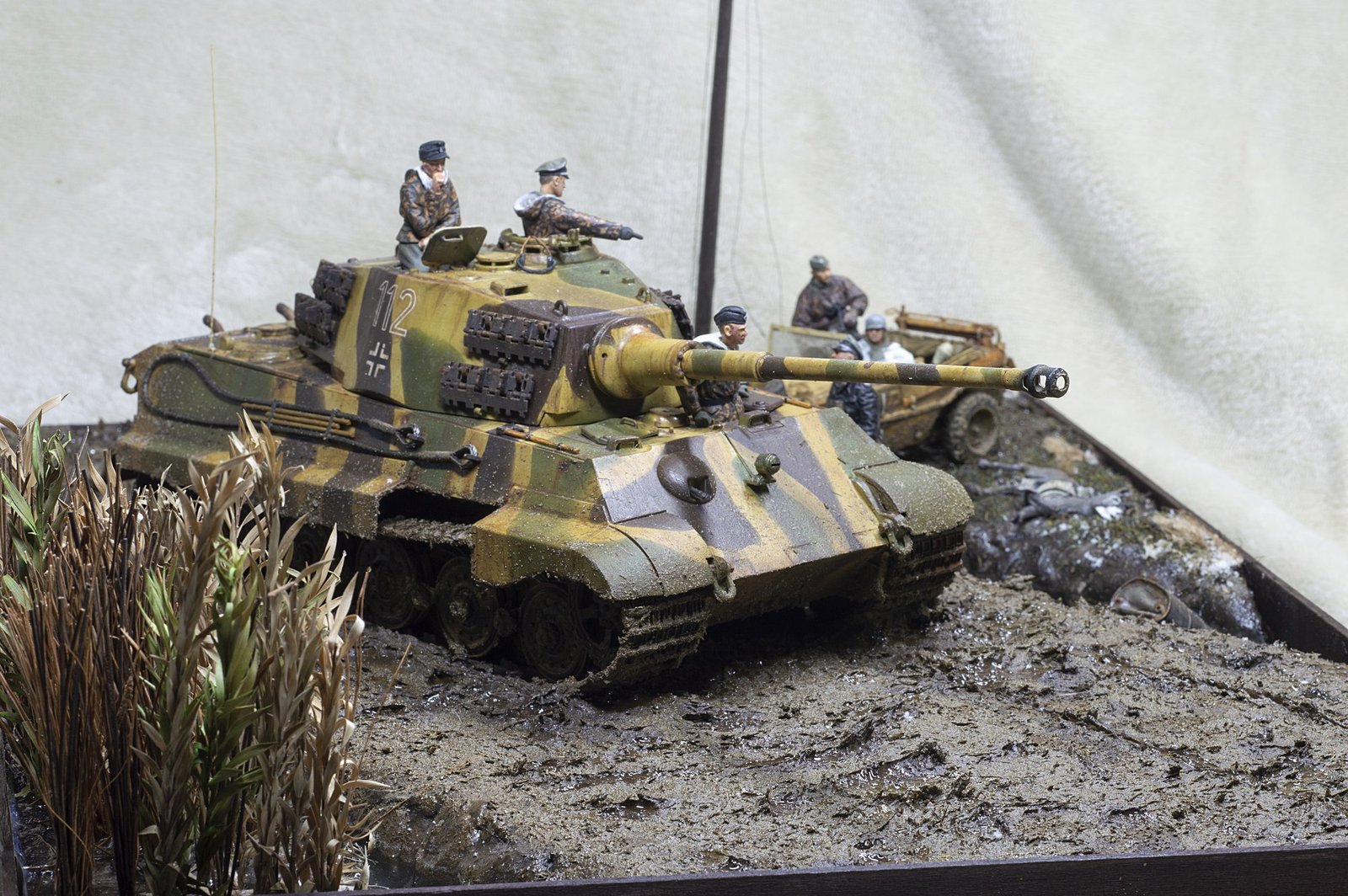
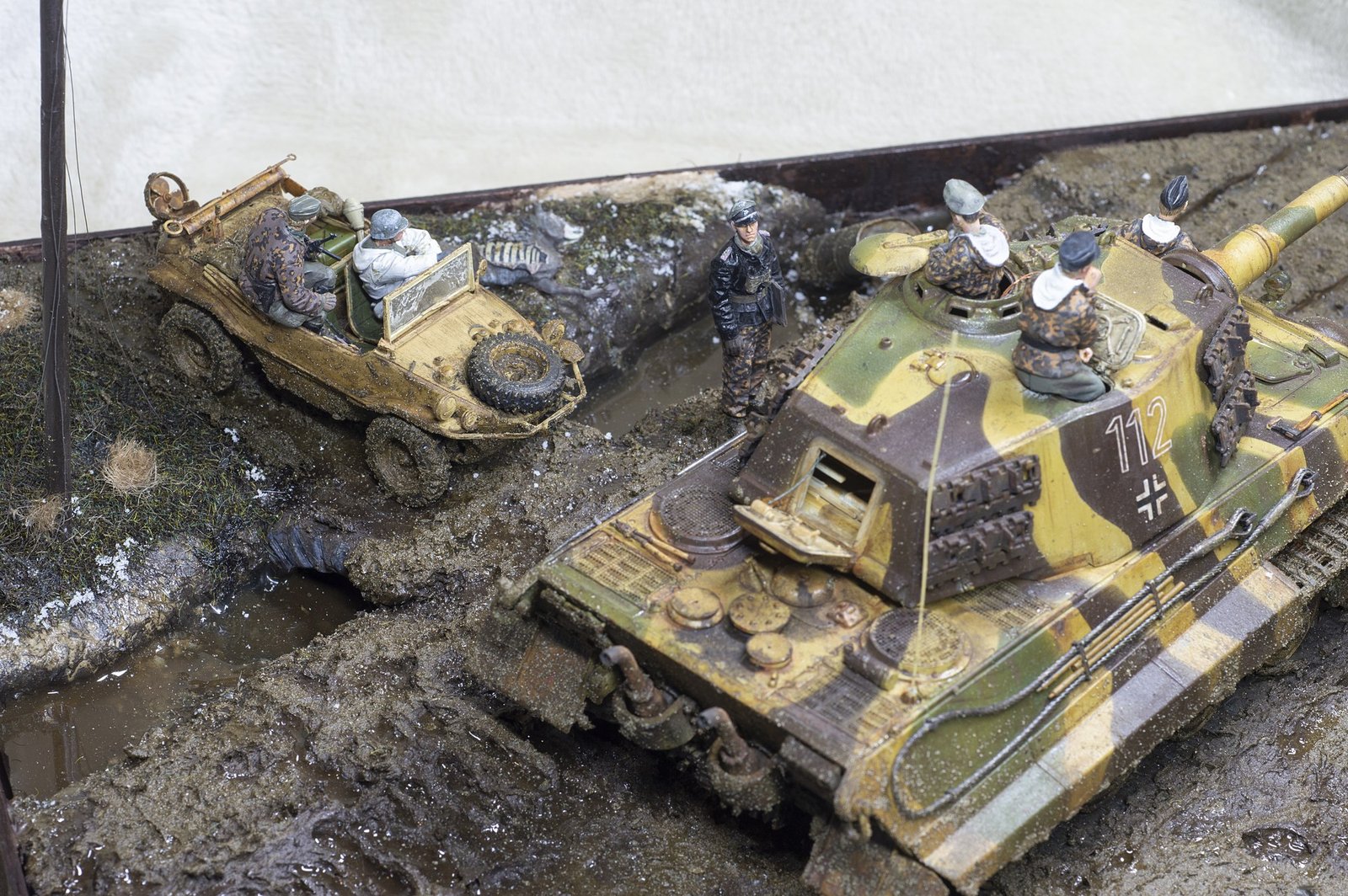
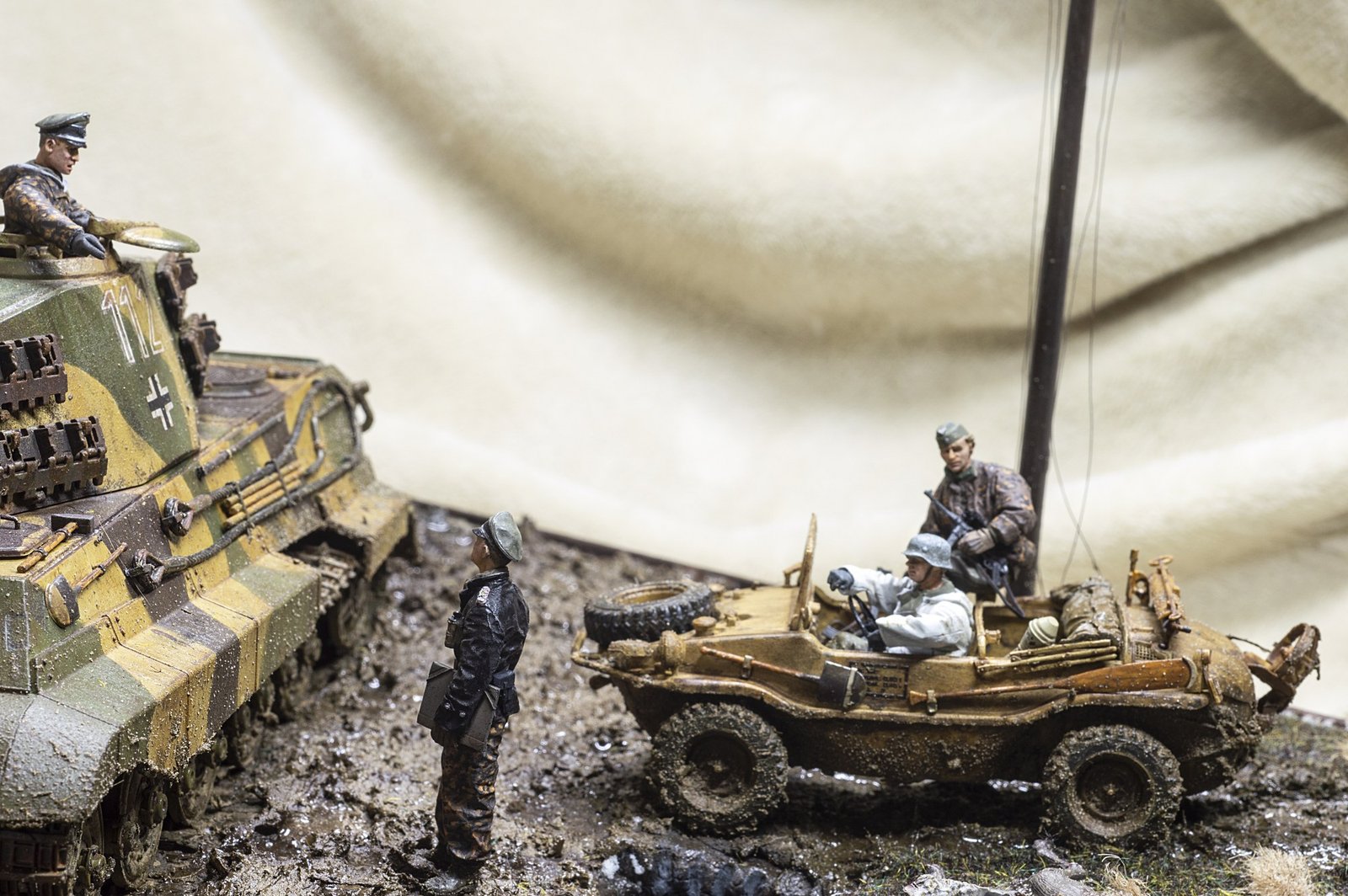
The scene catches the moment the withdrawal order arrives. A Tiger II has
stopped on a sunken farm track, its ruts filled with brown standing water. An
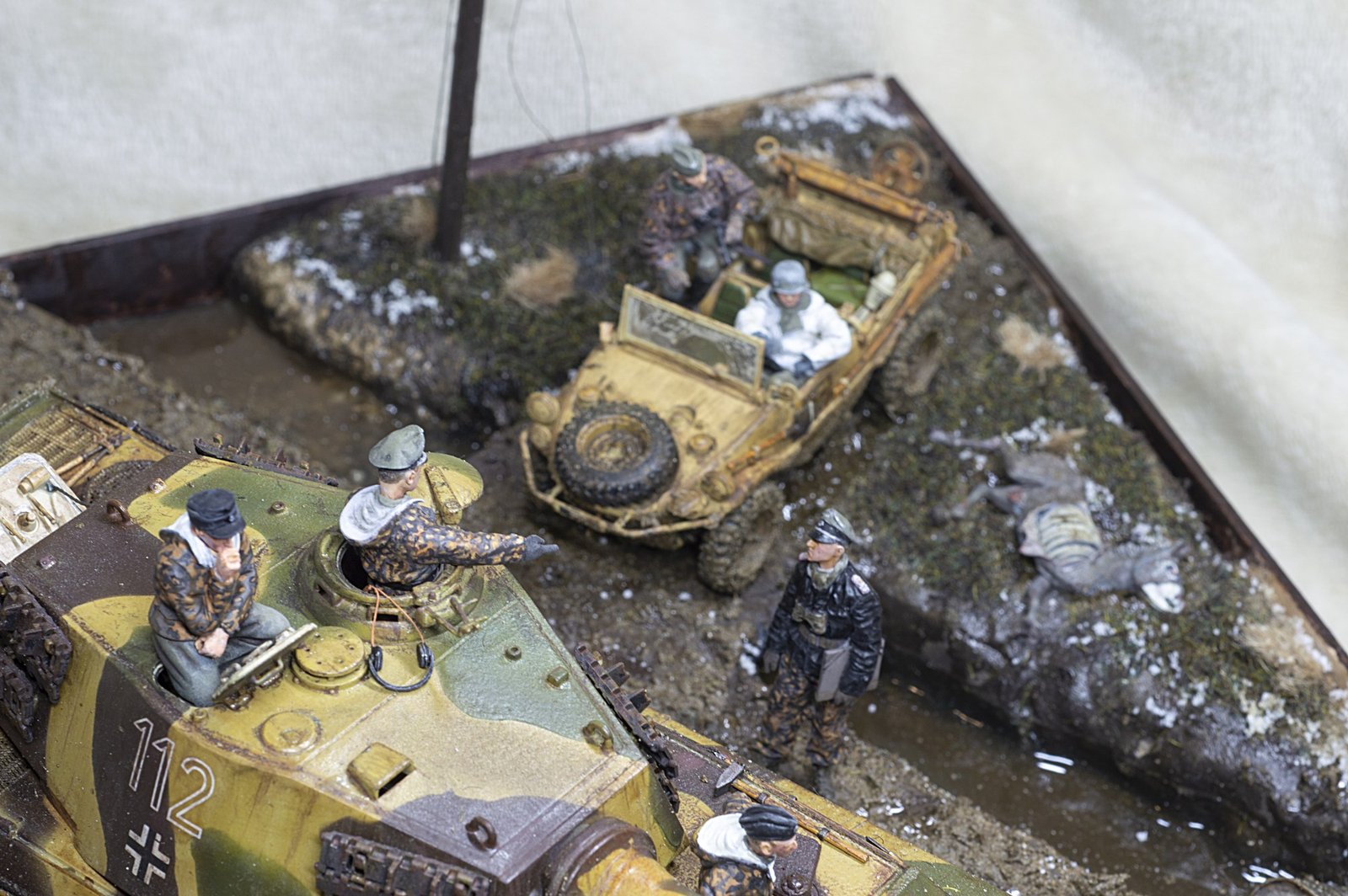
officer has come across country in a Schwimmwagen, stepped down into the mud and
is talking to the tank commander, who listens from the cupola without quite
climbing out. The rest of the crew wait on the engine deck, one of them smoking.
Nobody is hurrying: it is a short conversation between men who already know what
they are about to be told.

The rest of the base is deliberately empty. A telegraph pole with a crow on it,
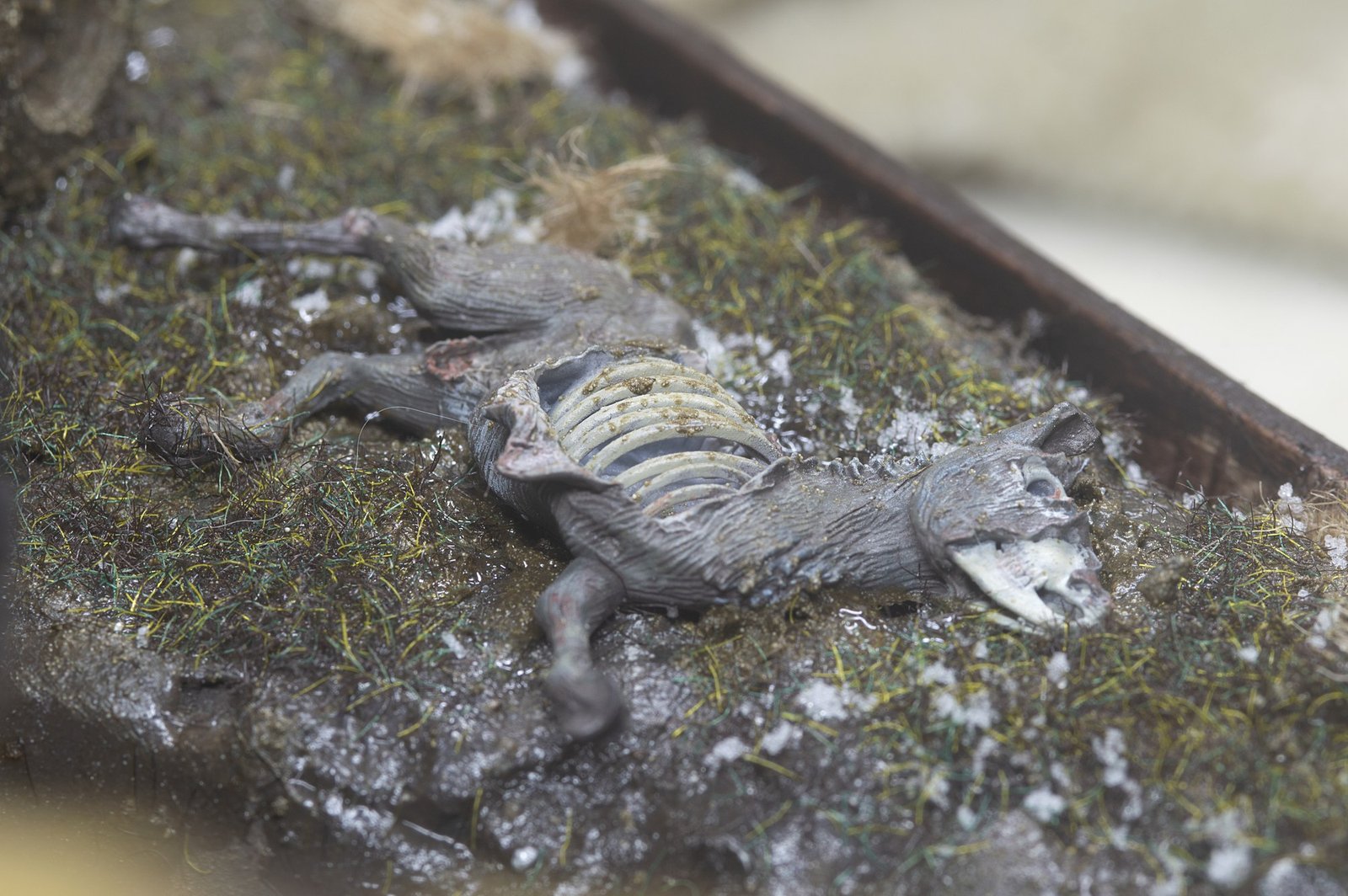
an abandoned drum, the carcass of a horse half sunk in the dead grass and the
last patches of thawing snow. What the diorama is about is not a battle but the
end of something: a desolate plain, cold mud and an order that comes too late.

The build, step by step

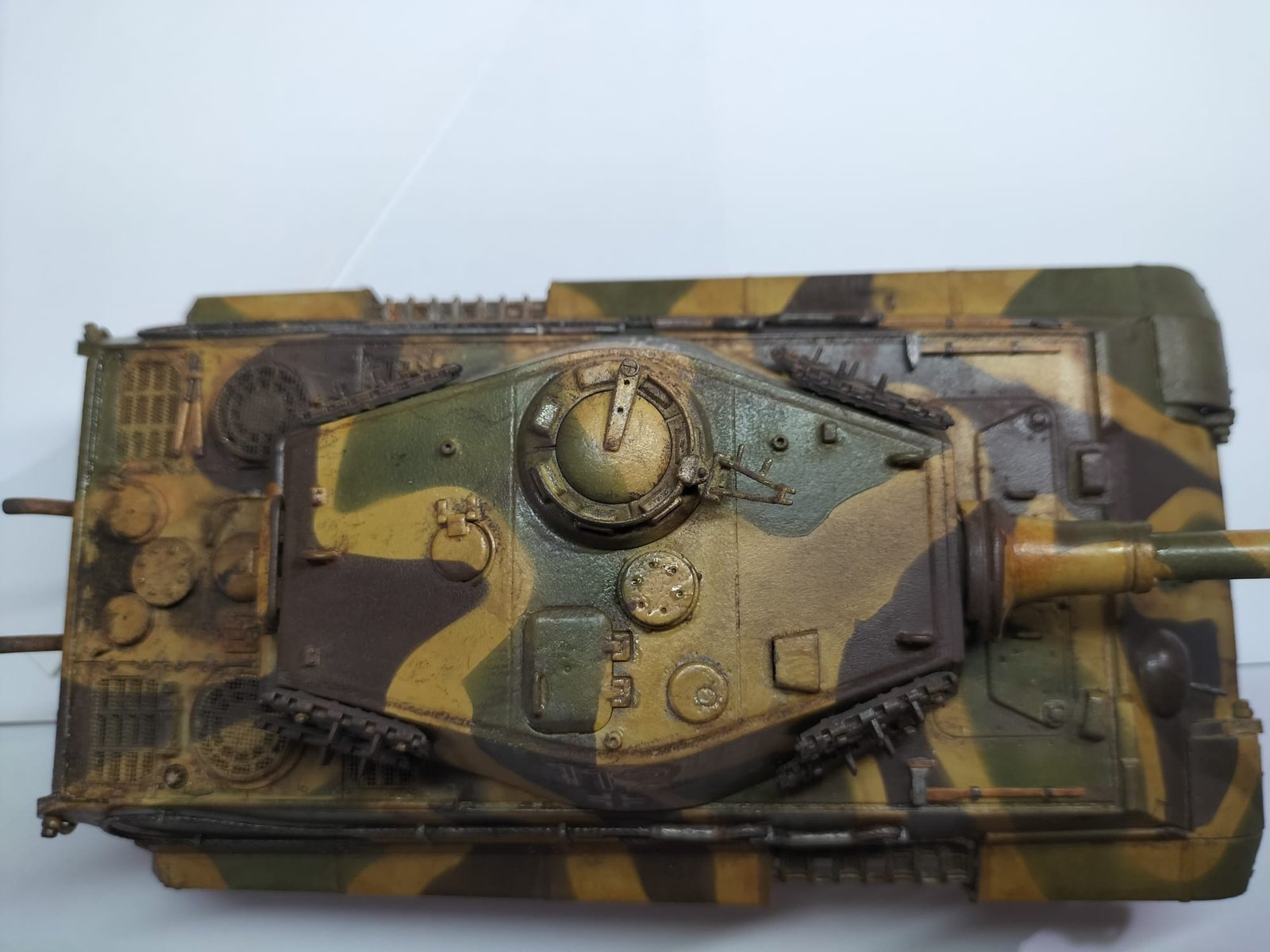
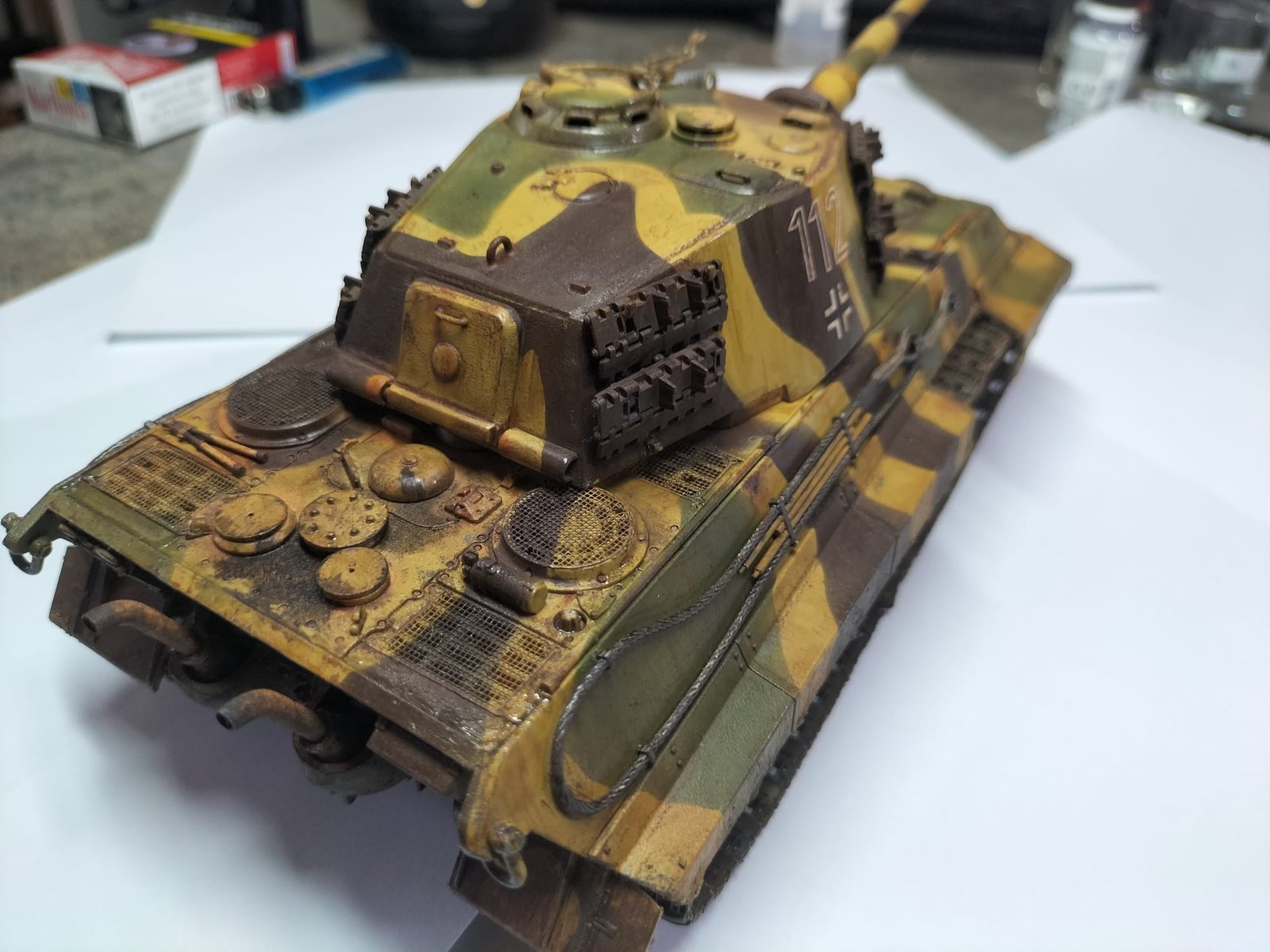
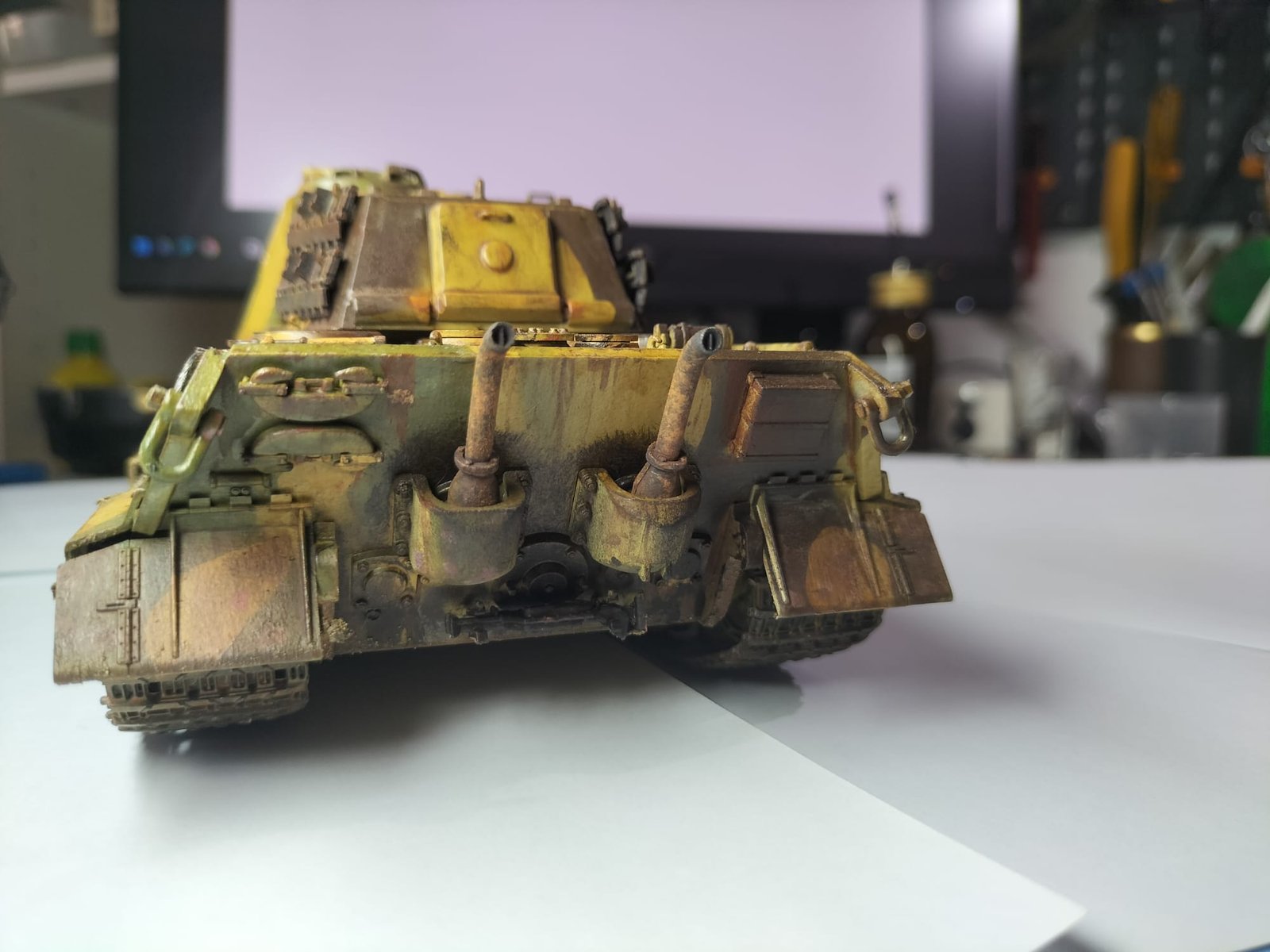
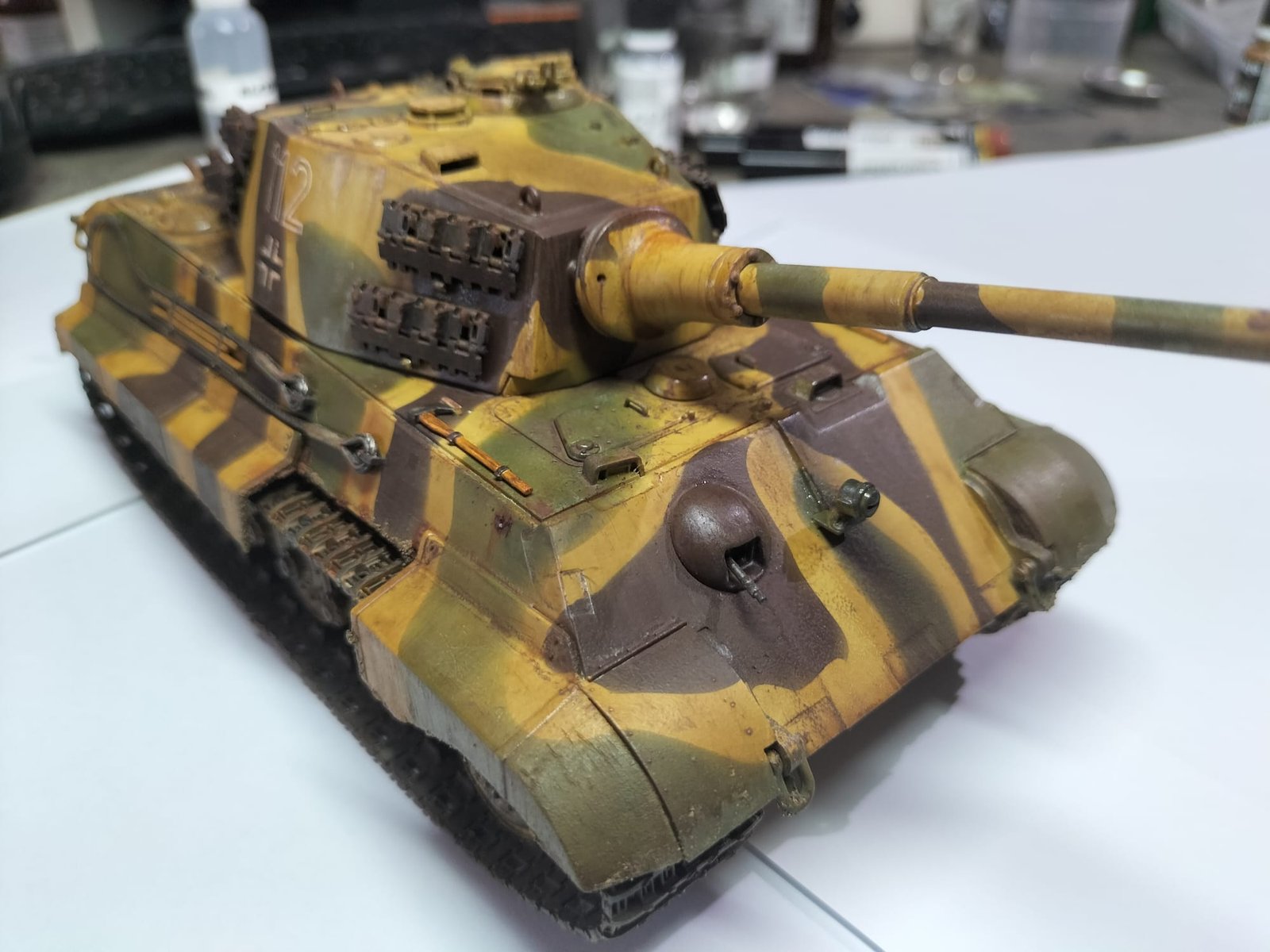
The Königstiger, before it touched the mud

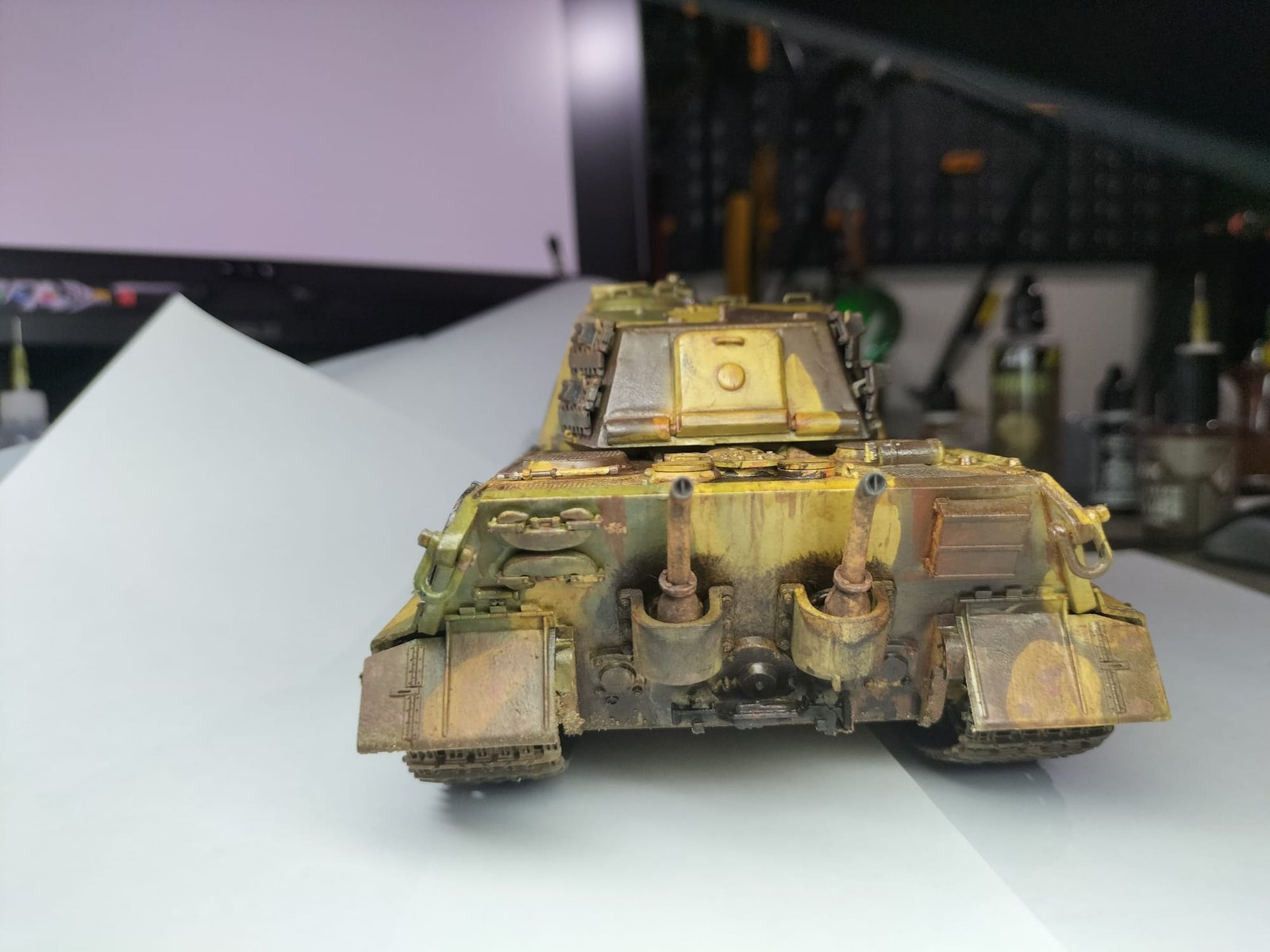
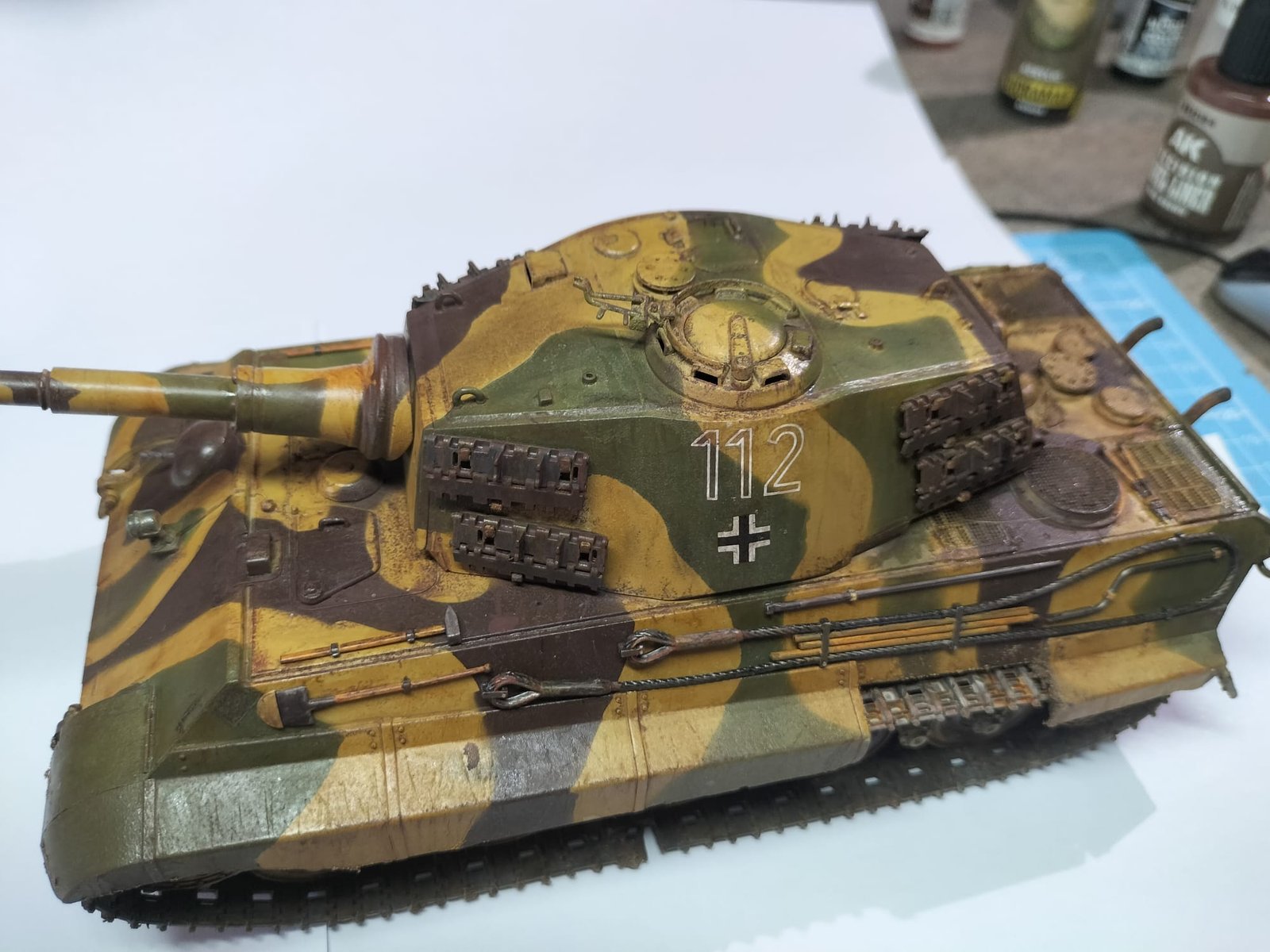
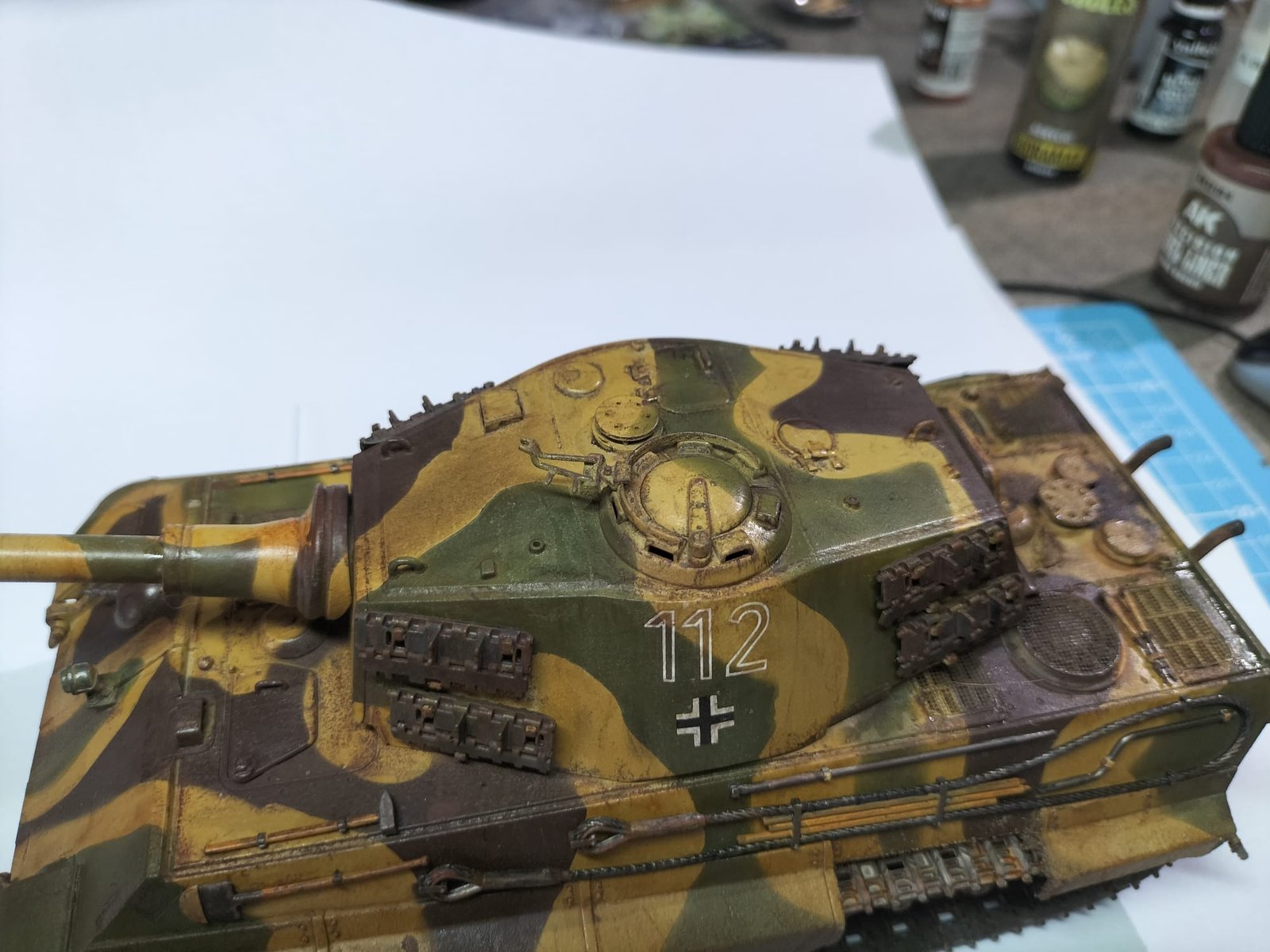
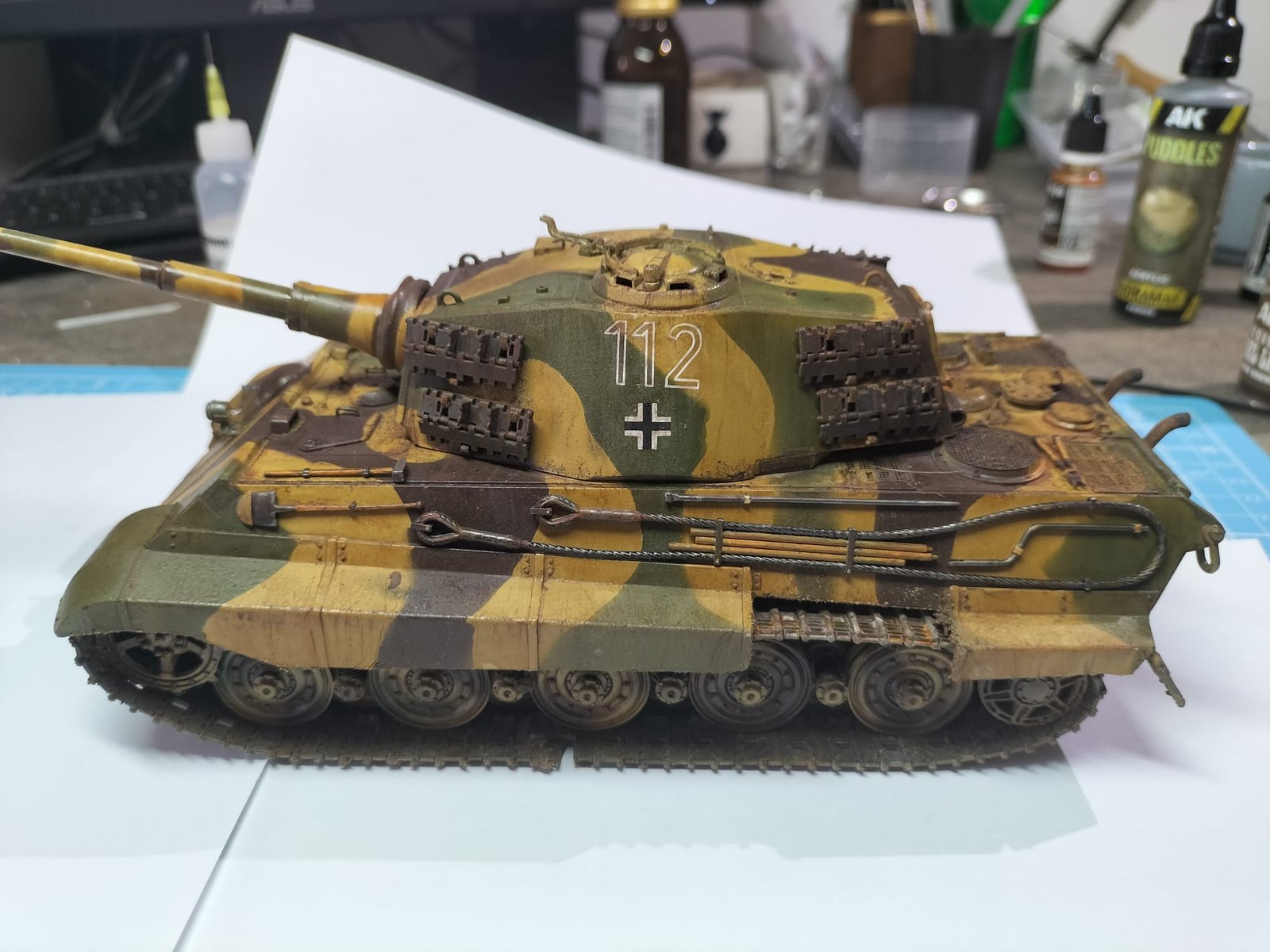
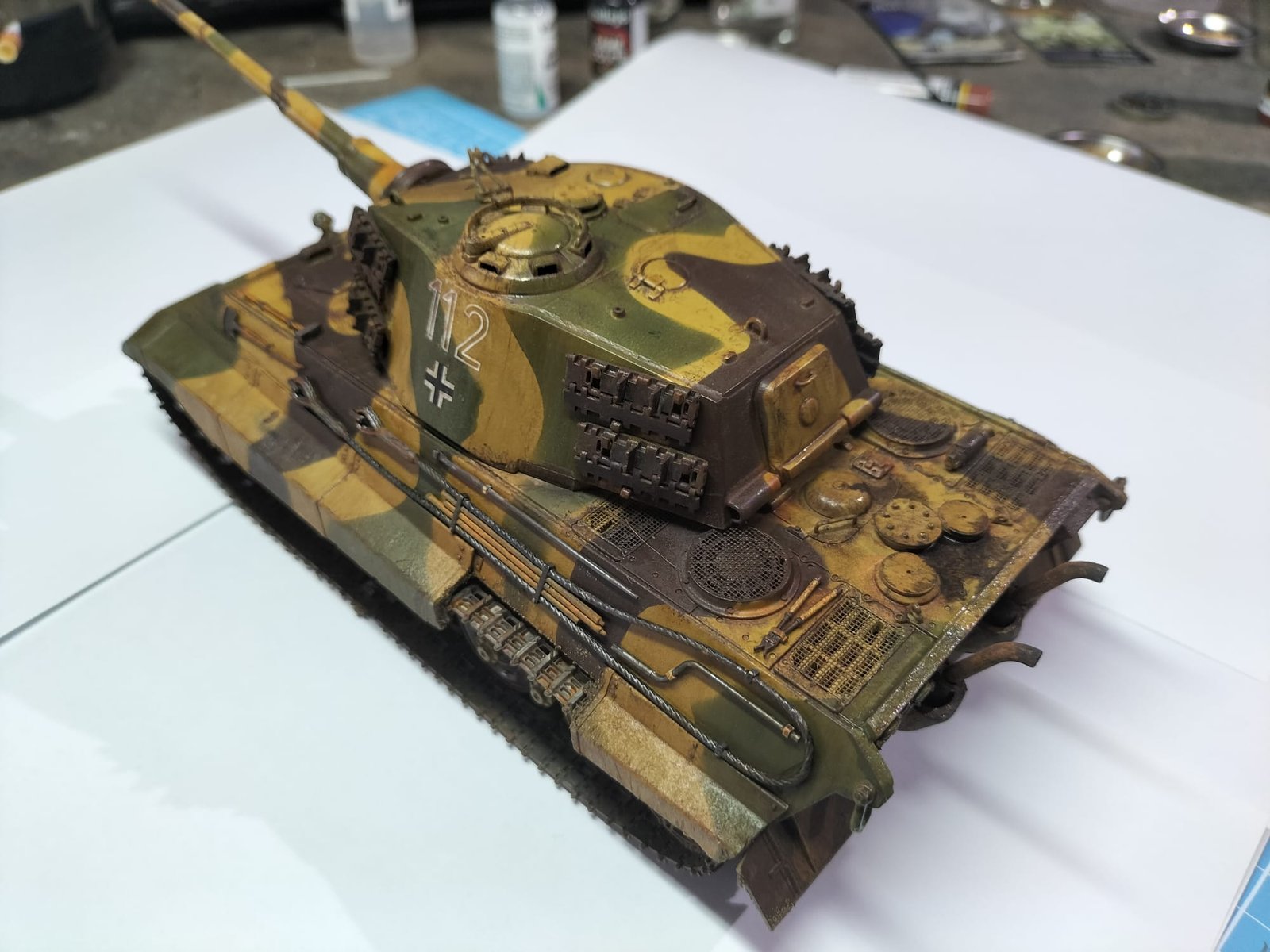
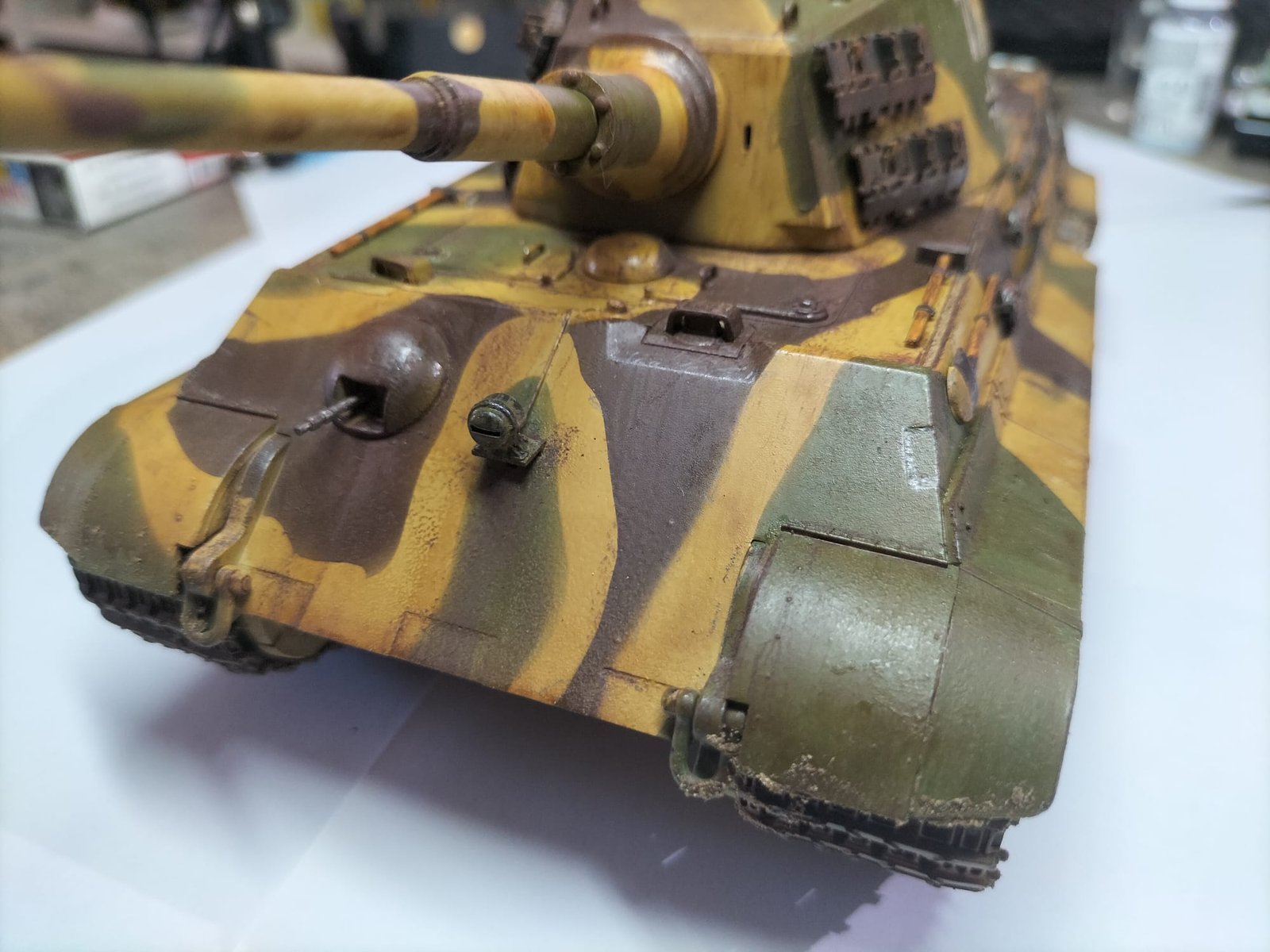
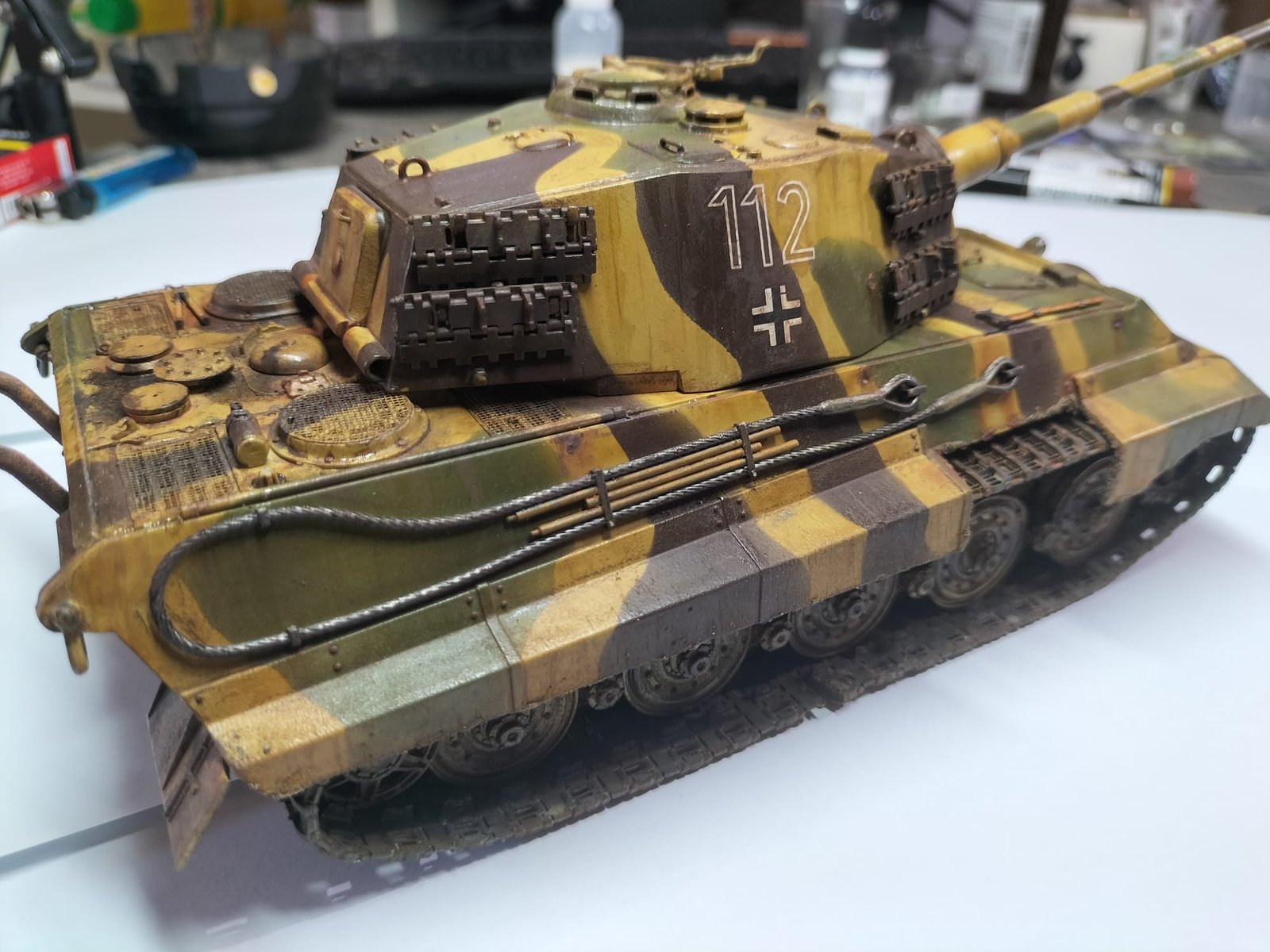
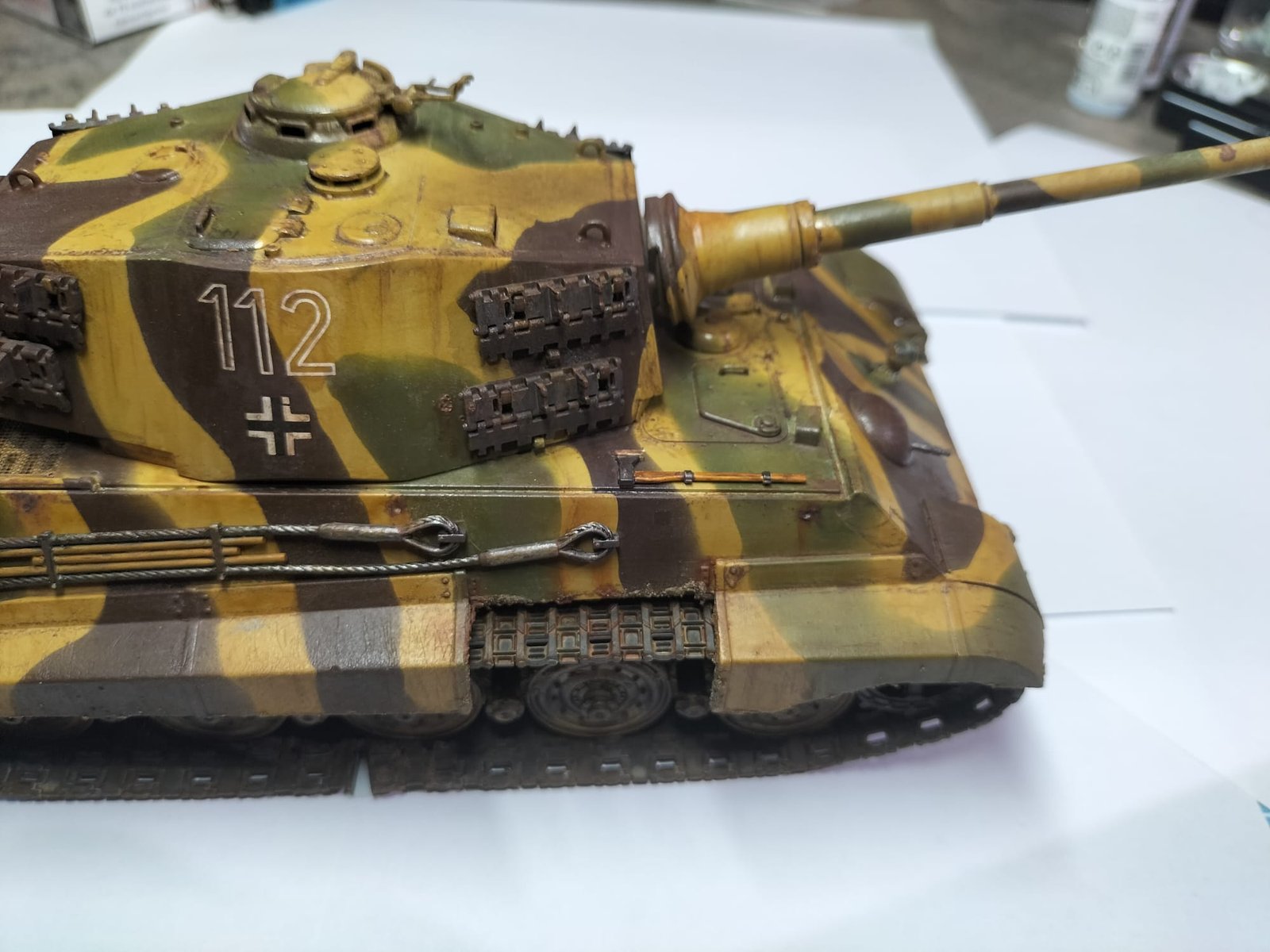
The finished Tiger II, photographed on the bench before being mounted on the diorama. Three-tone camouflage brushed on with soft edges, the tactical number 112 in white outline, and the wear already in place: pale dust along the lower hull and the skirts, rust on the exhausts and on the spare track links carried on the turret. A full turn around the model to check that the camouflage reads from every angle.
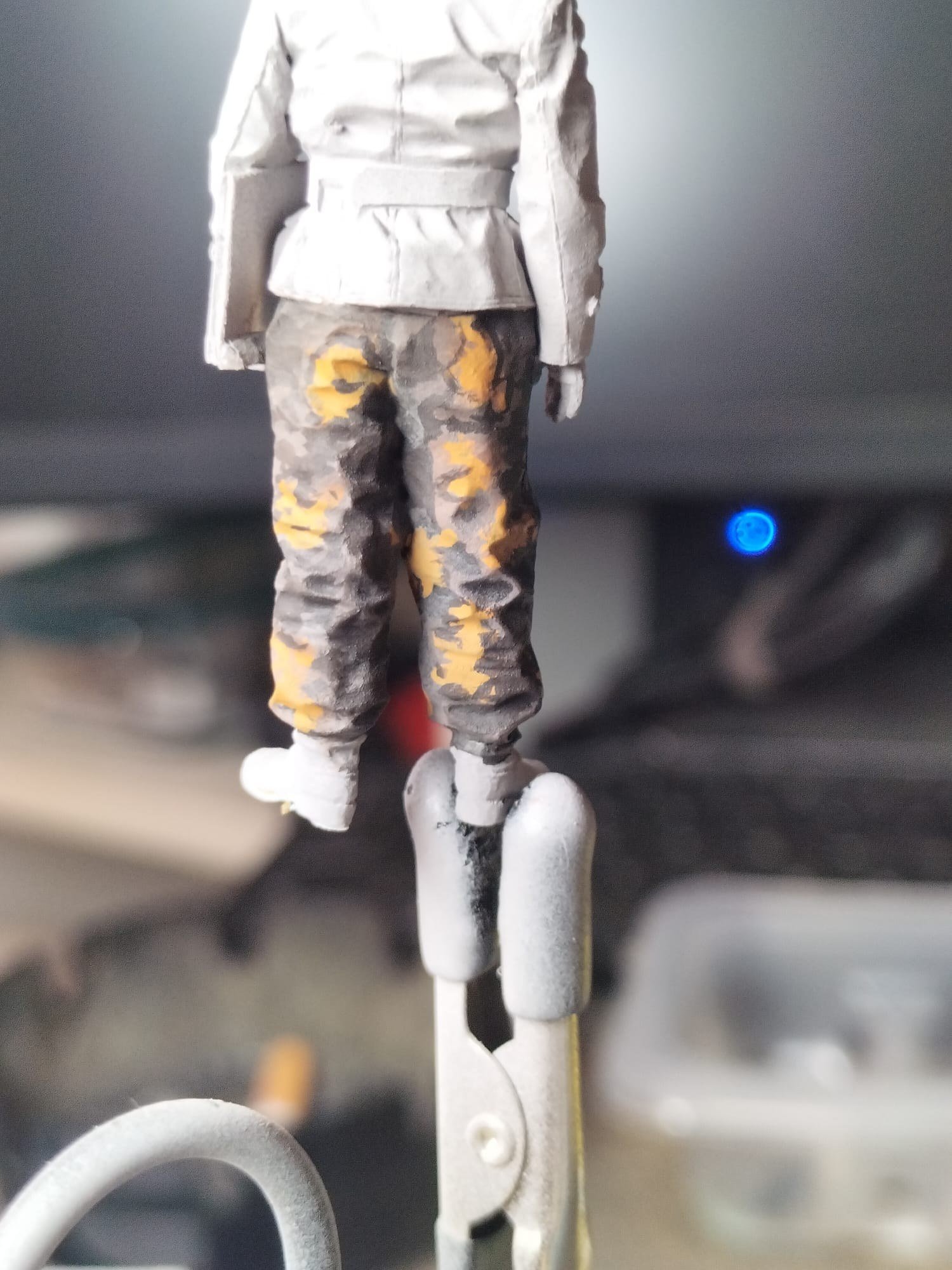
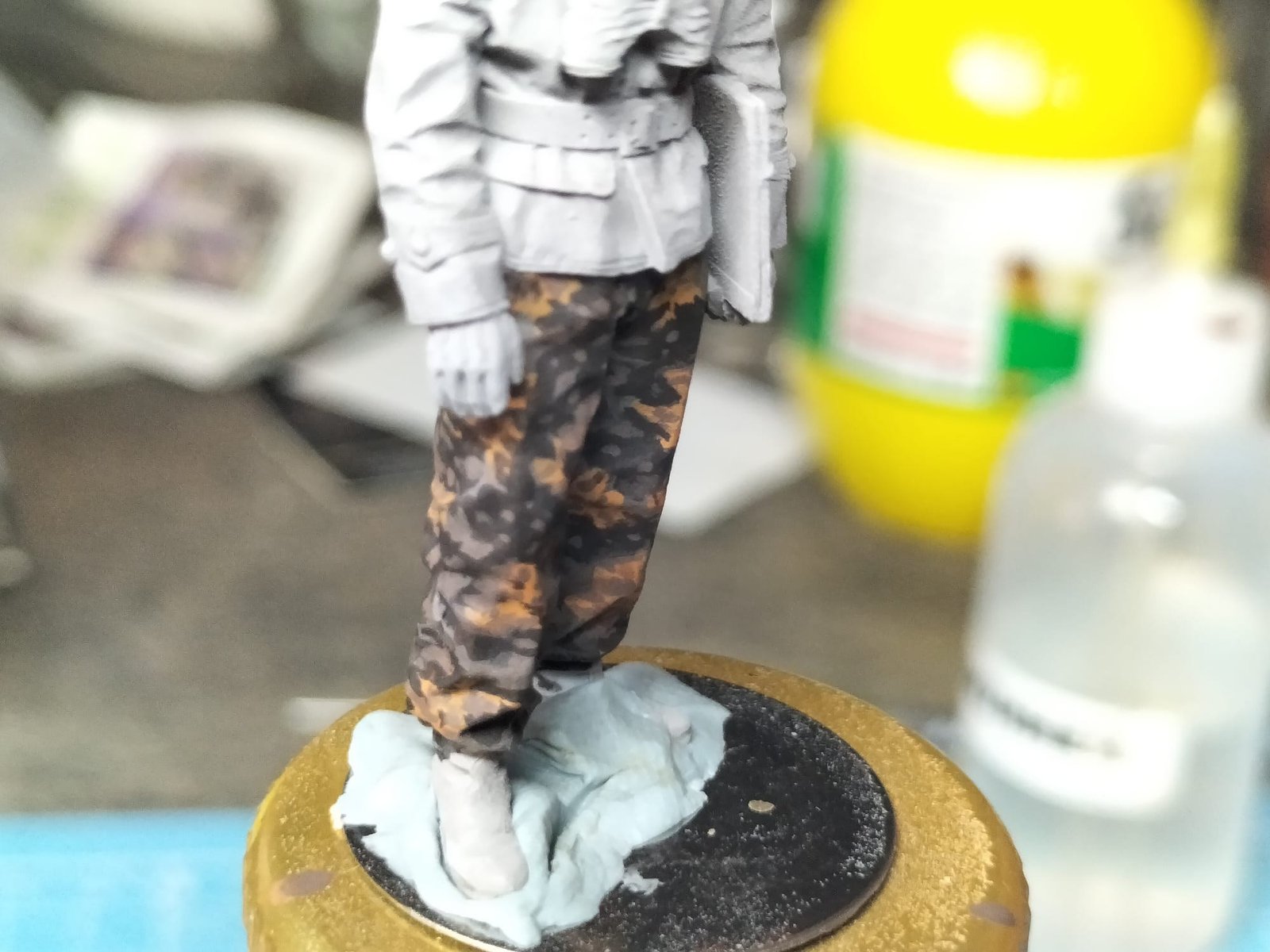
The figures: pea-dot camouflage

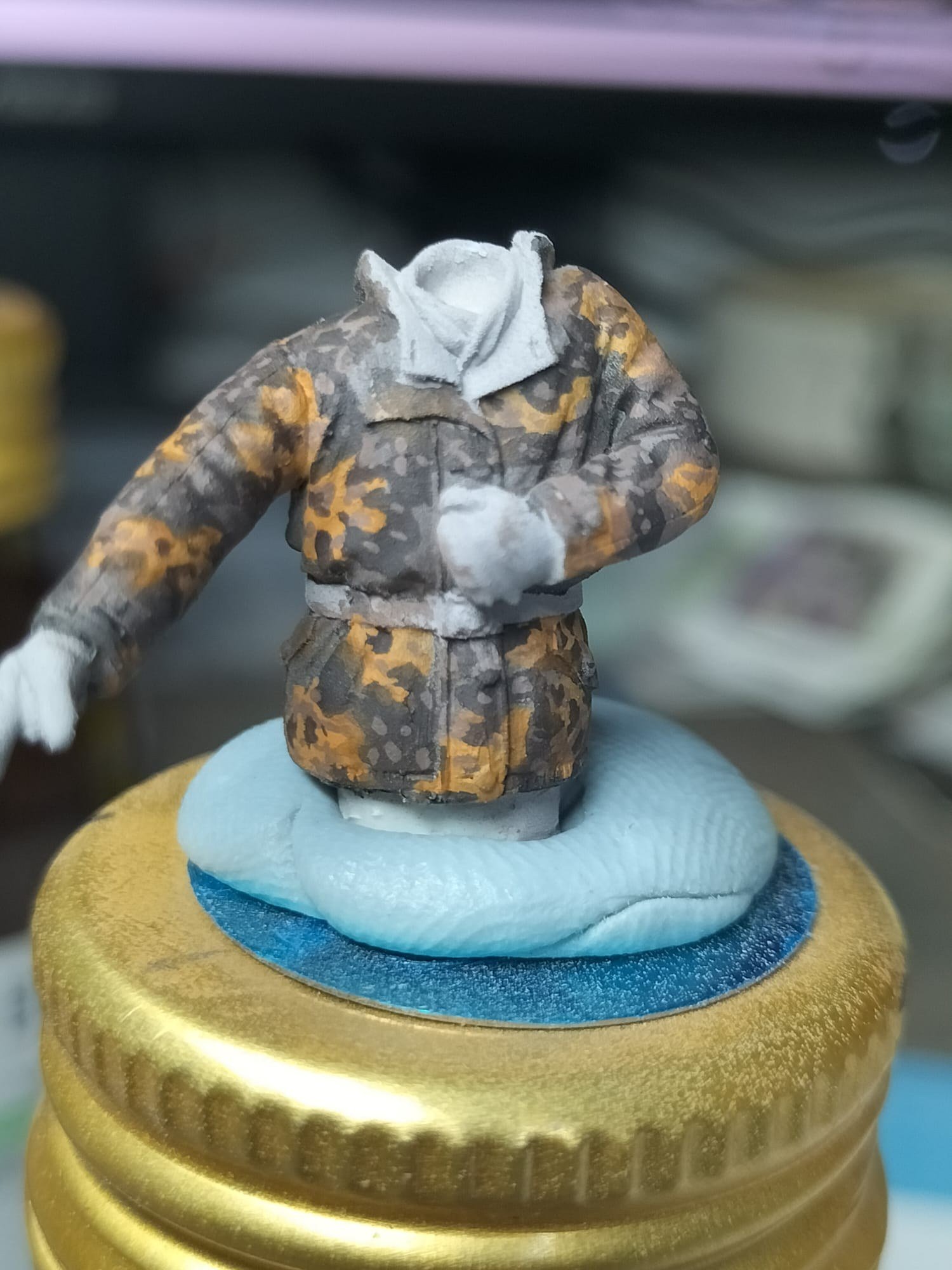
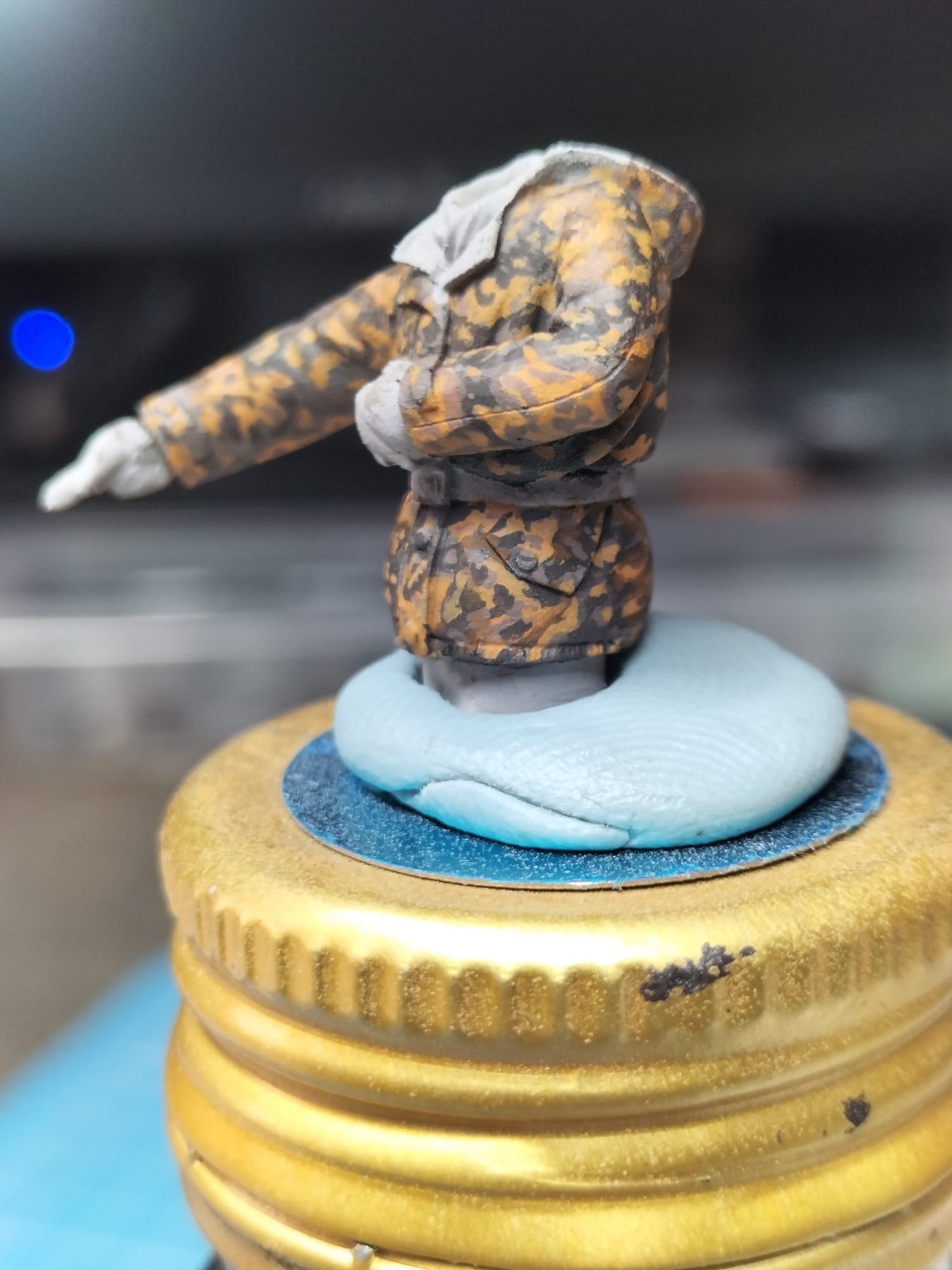
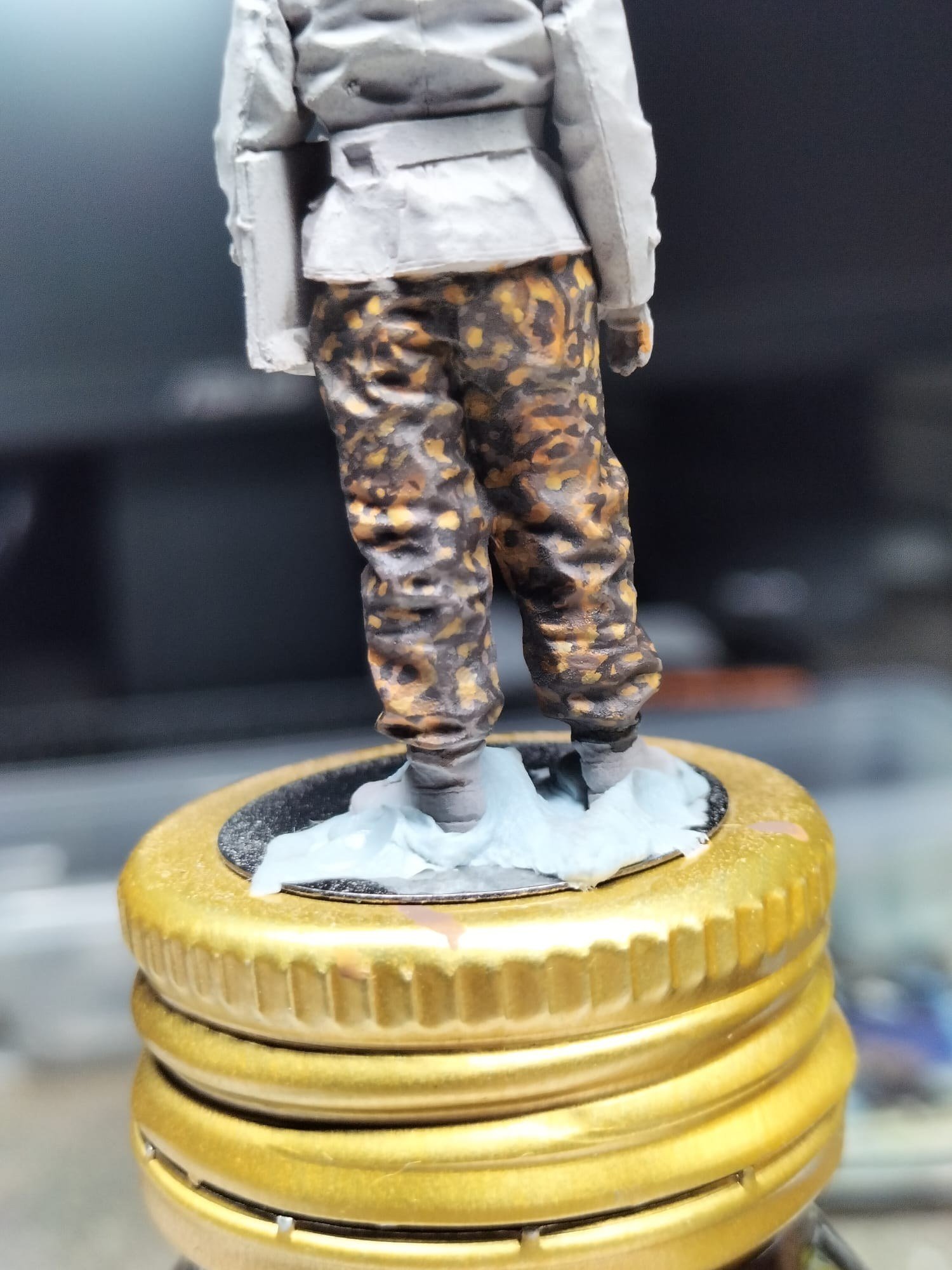
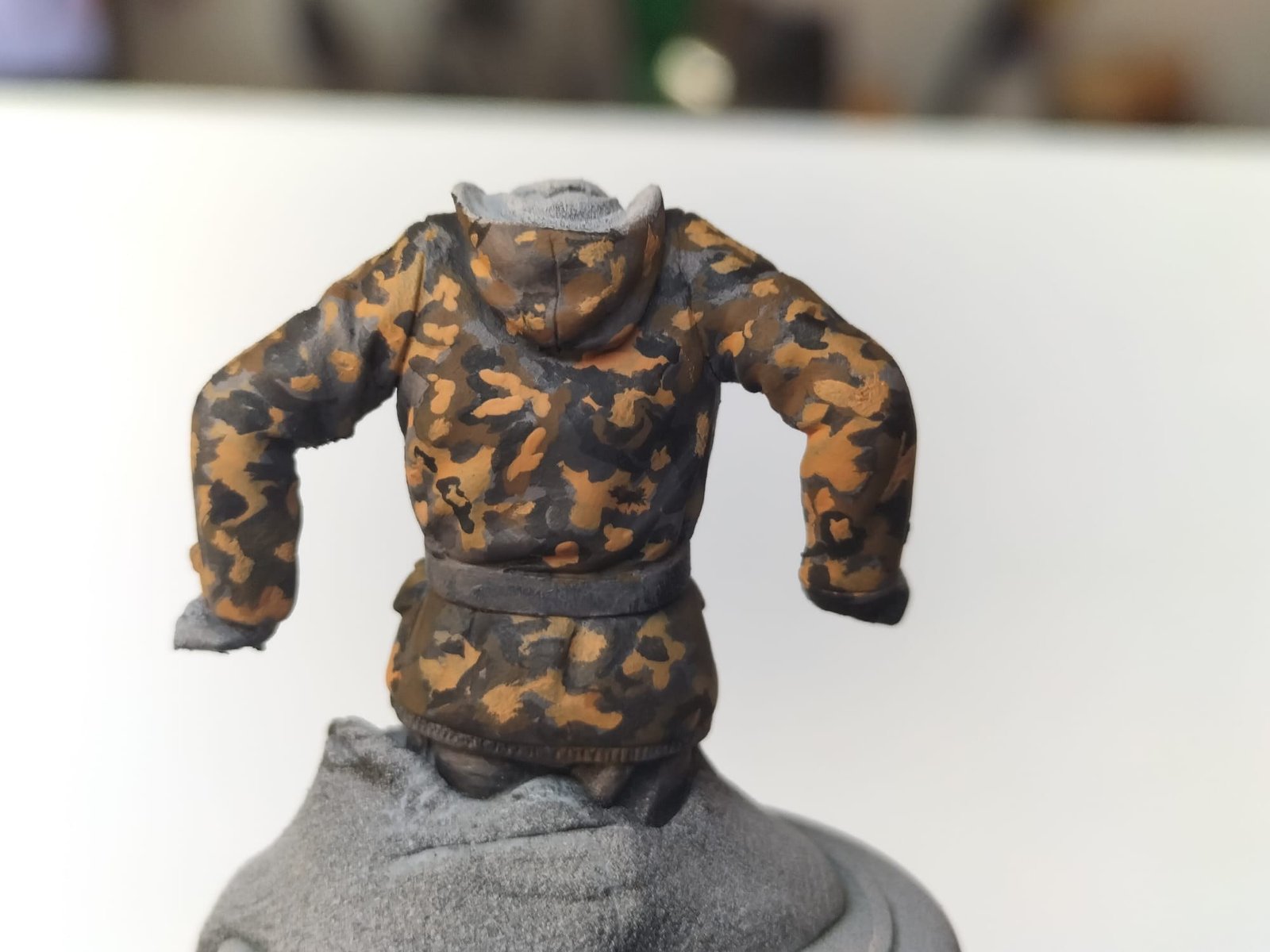
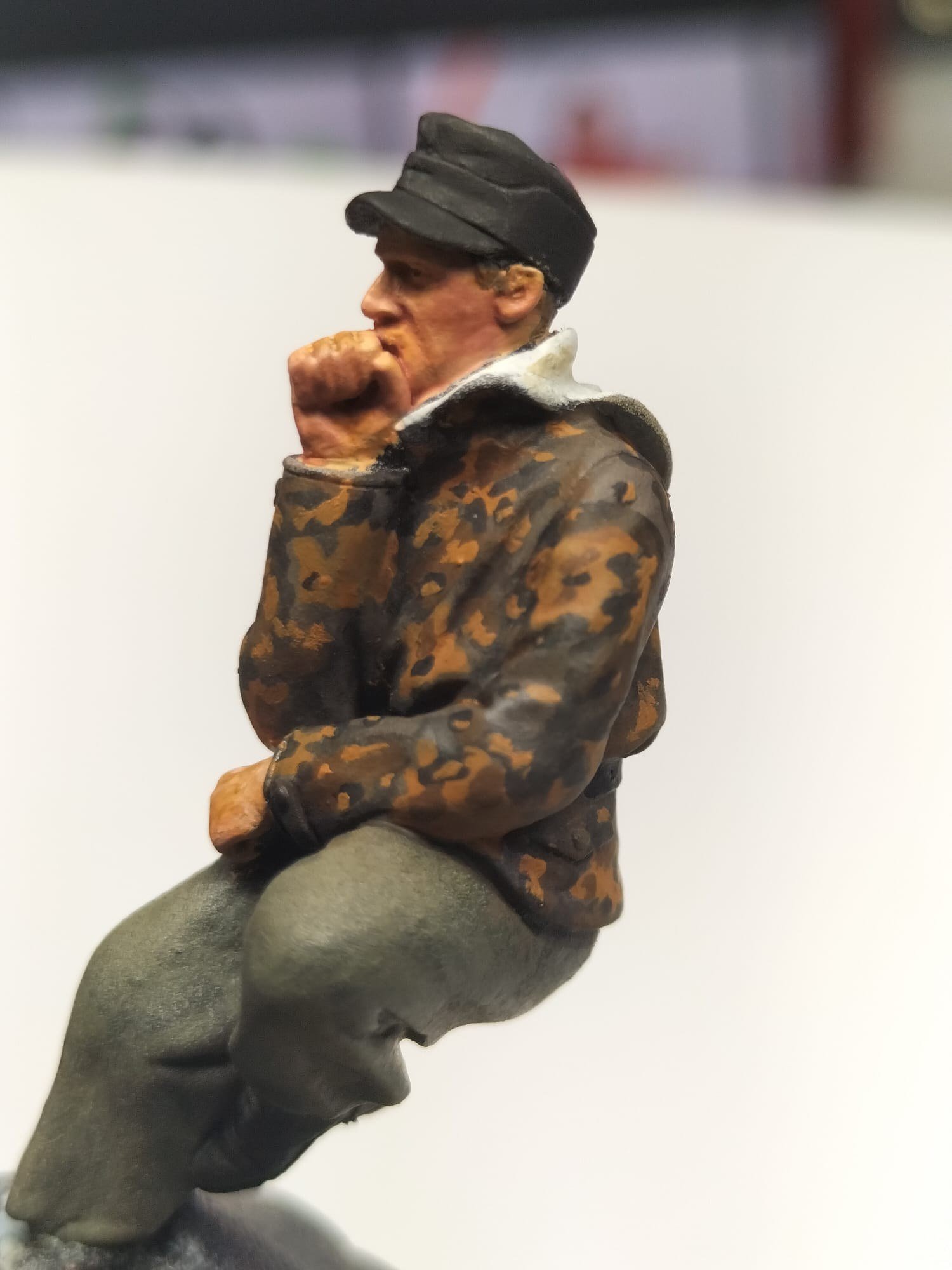
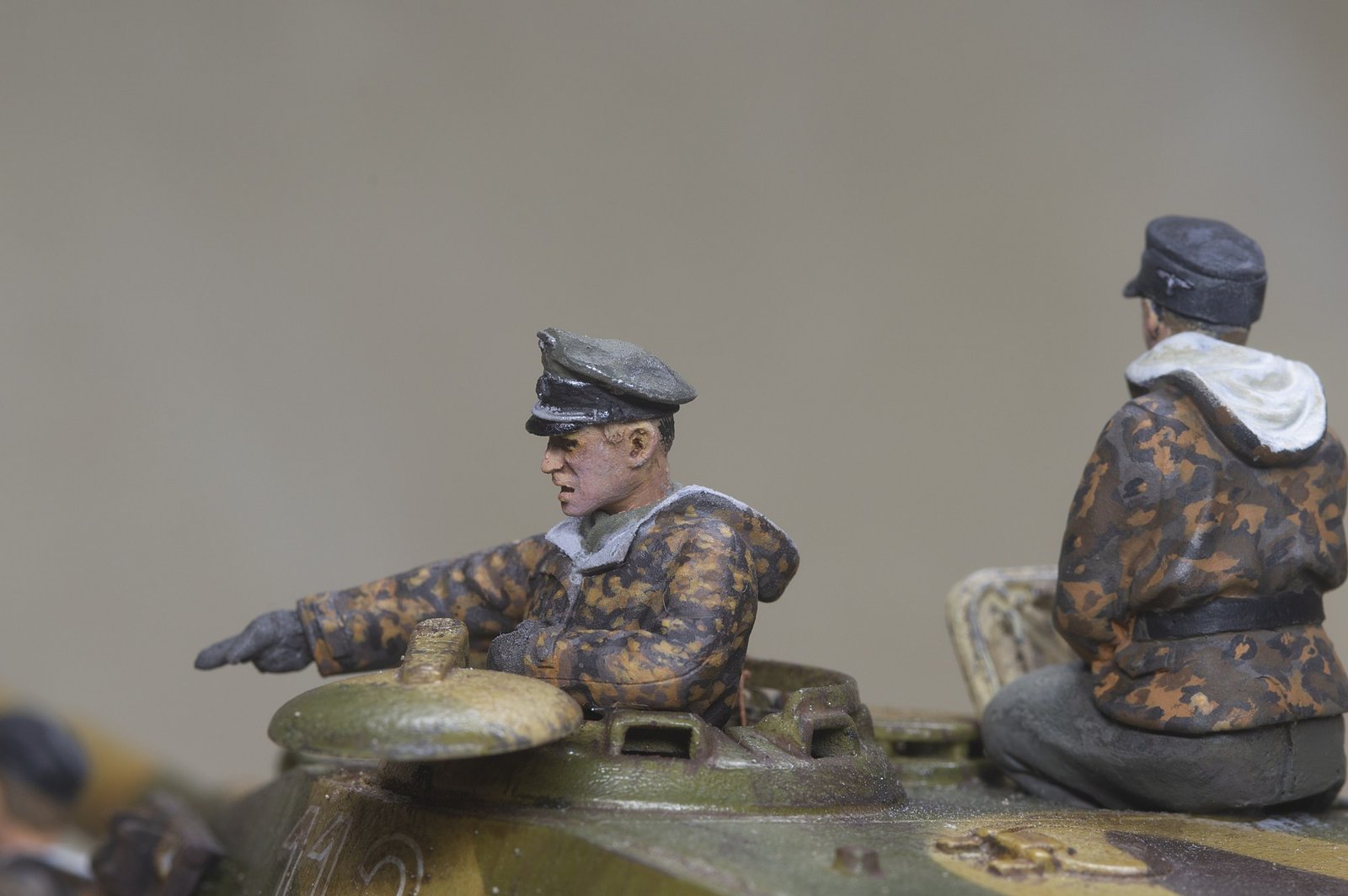
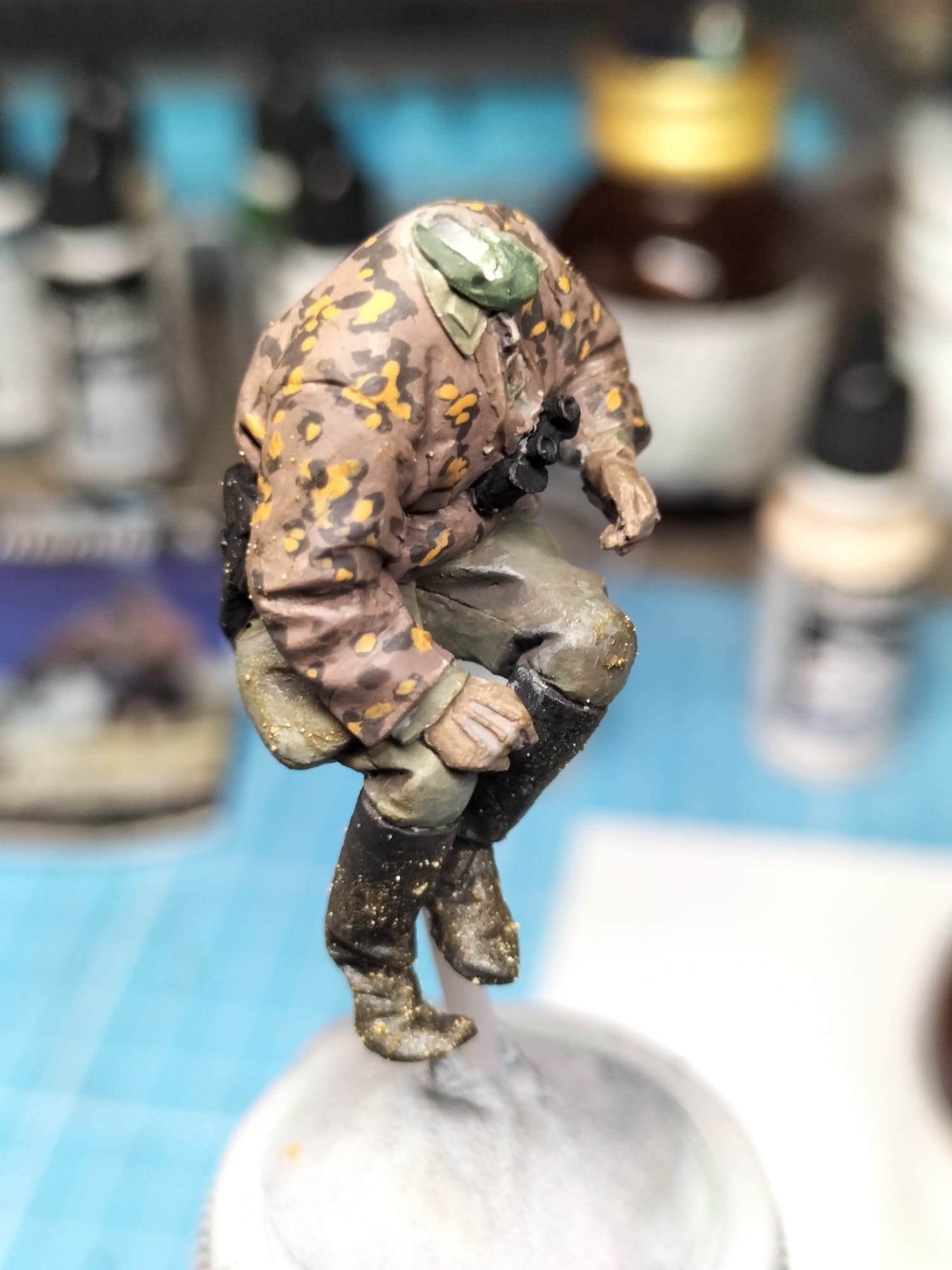
Waffen-SS Erbsenmuster, dot by dot and all of it by brush. The trousers first, with the figure still in grey, then the hooded smock. The pattern is refined over successive passes: the first version comes out coarse and cold, and ends up smaller, warmer and lower in contrast. Each piece is painted loose, held in a clamp or pinned to a bottle cap with putty, so that every fold can be reached.

The figures: the Panzertruppe officer

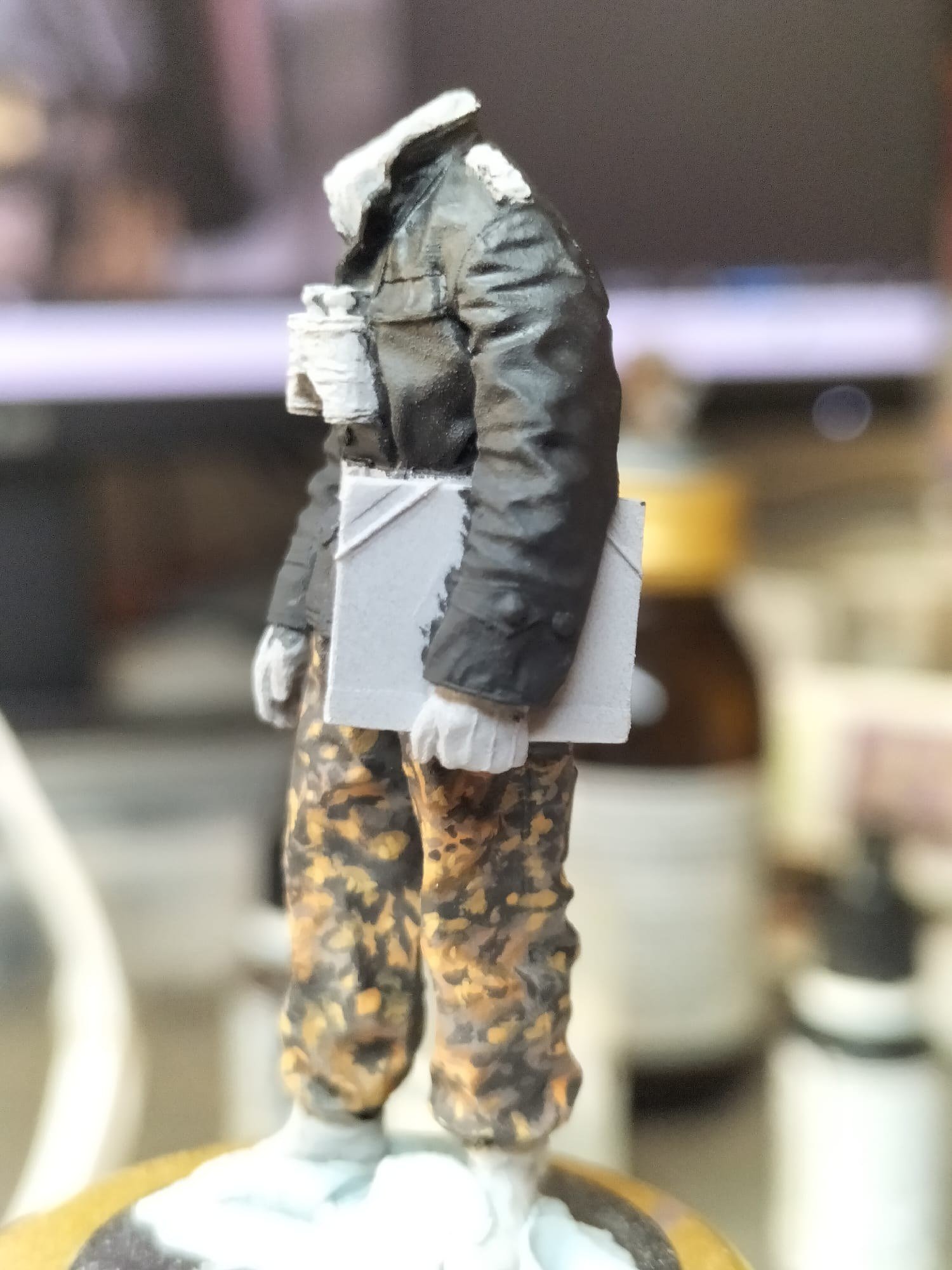
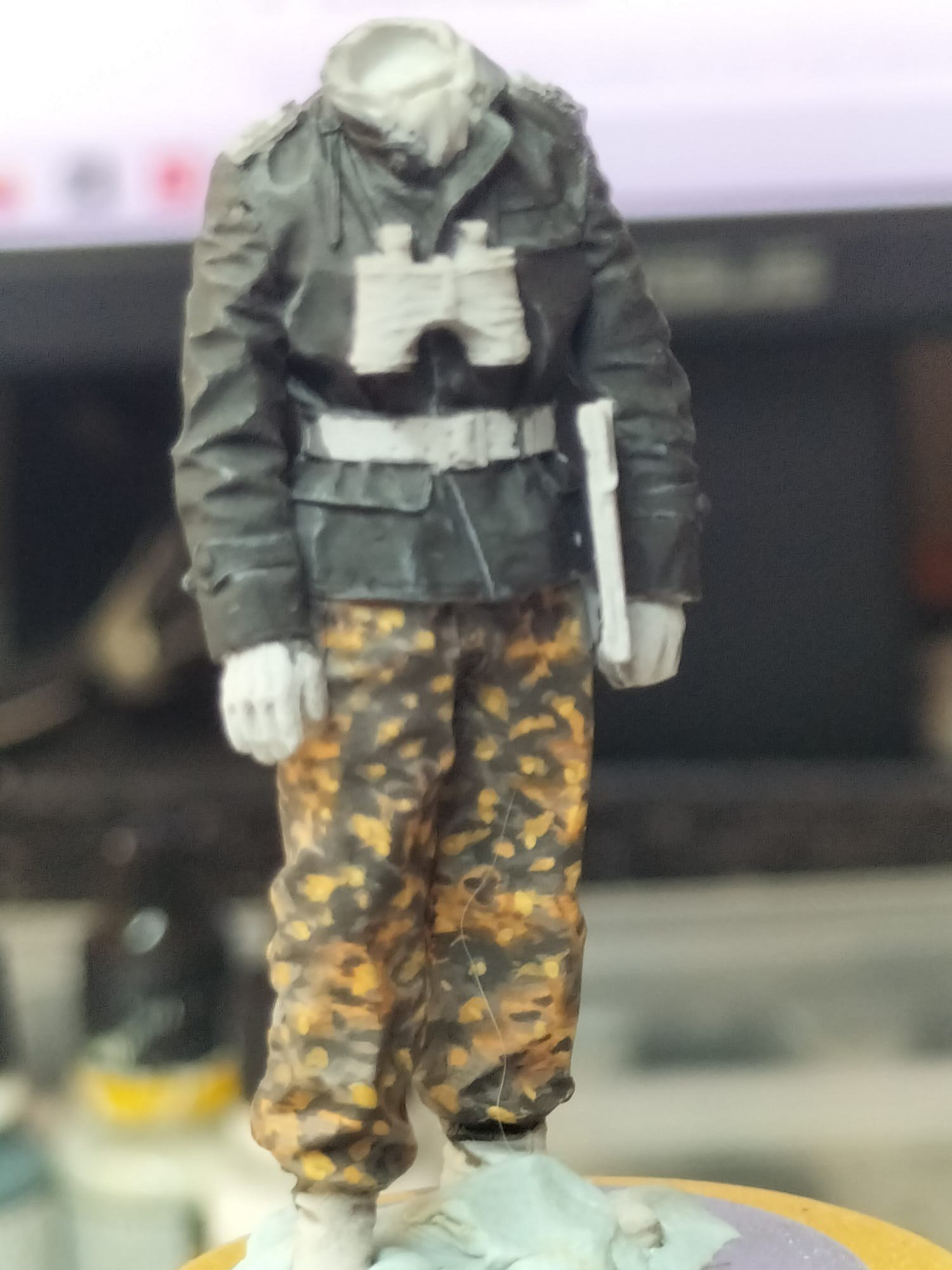
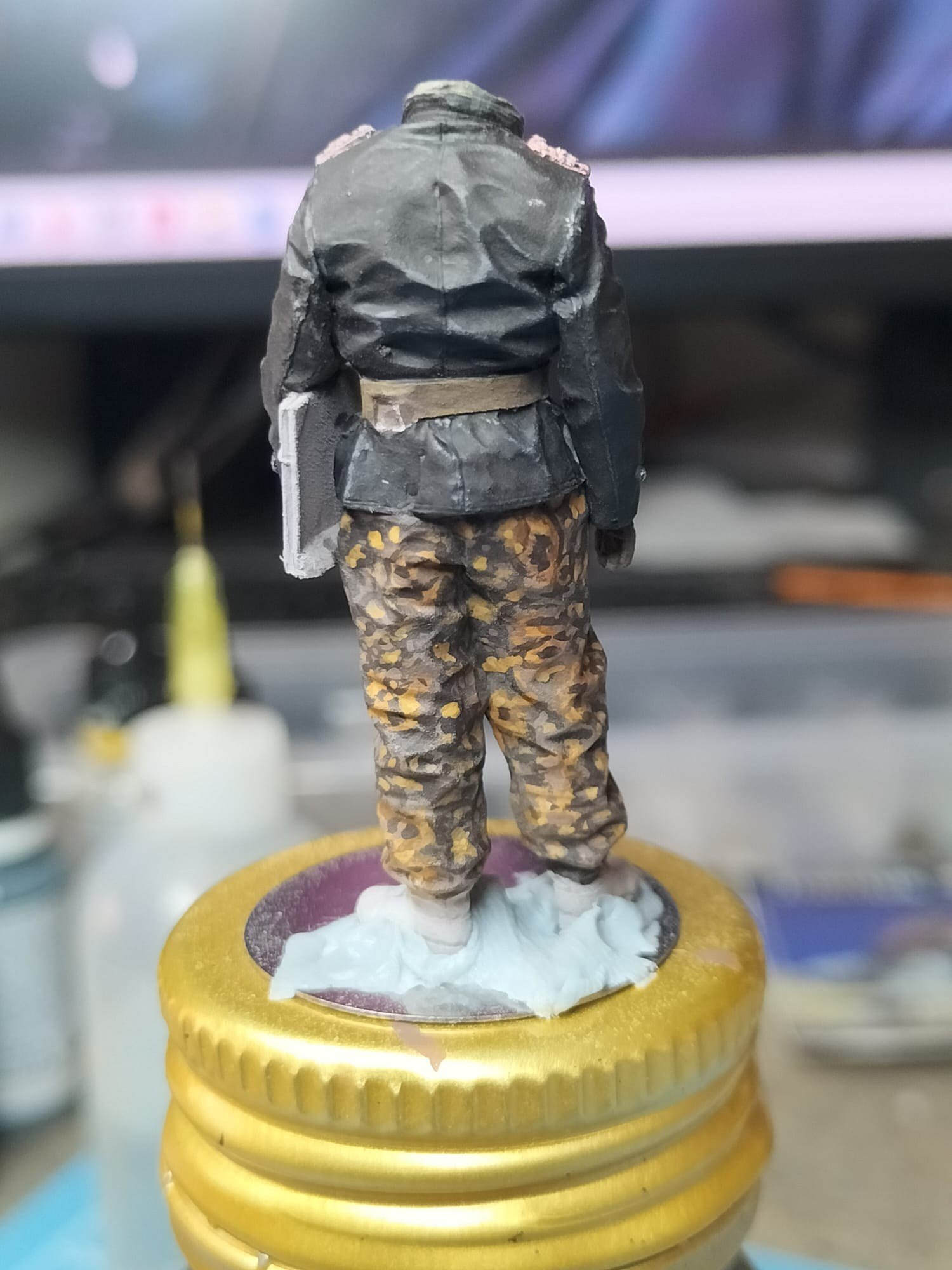
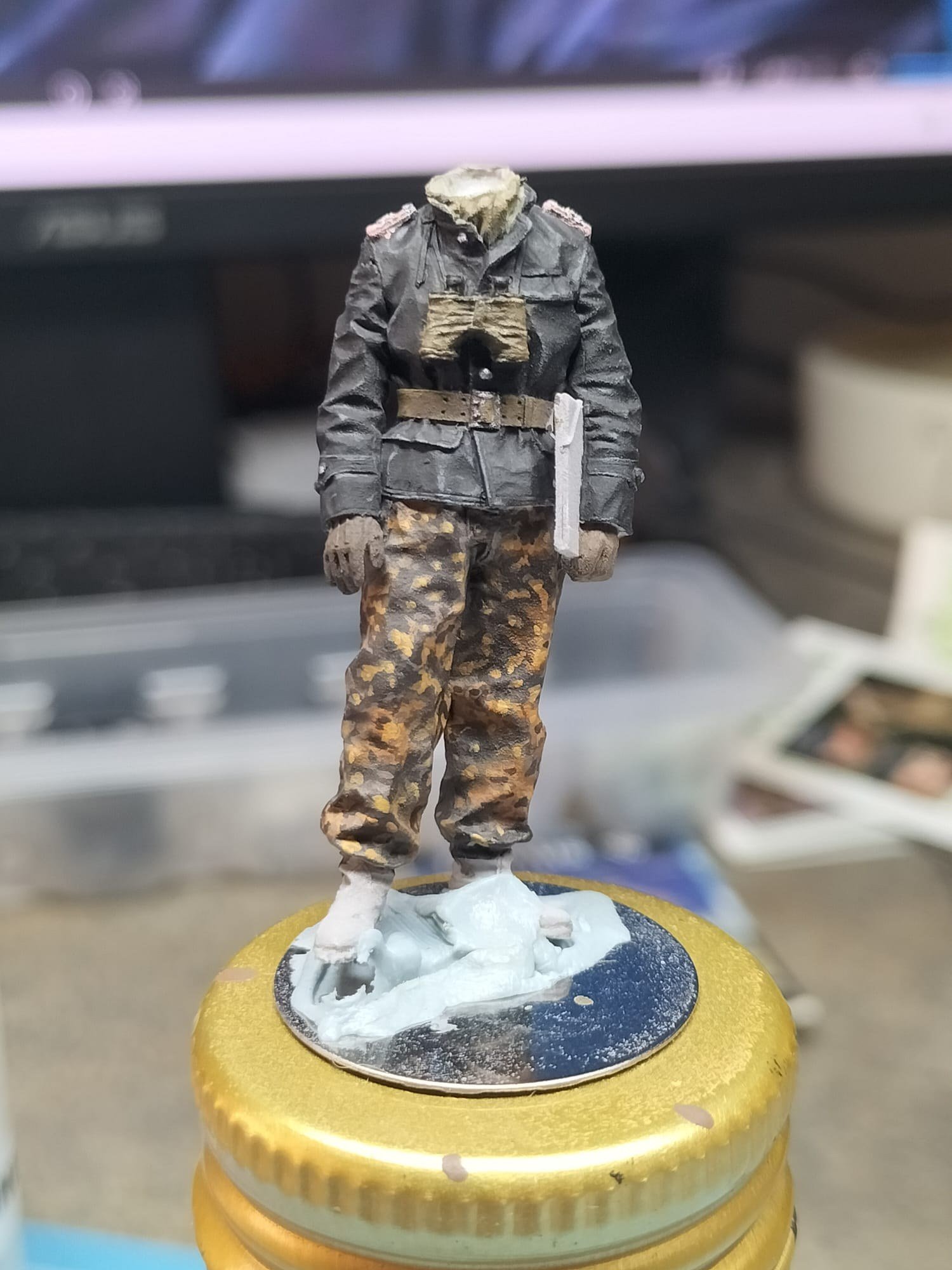
The man on foot, the one bringing the order. Black panzer jacket over camouflage trousers: black is never painted black — it is lifted with greys until the folds read. Then the shoulder boards, the belt and the map case.
The figures: heads, one at a time

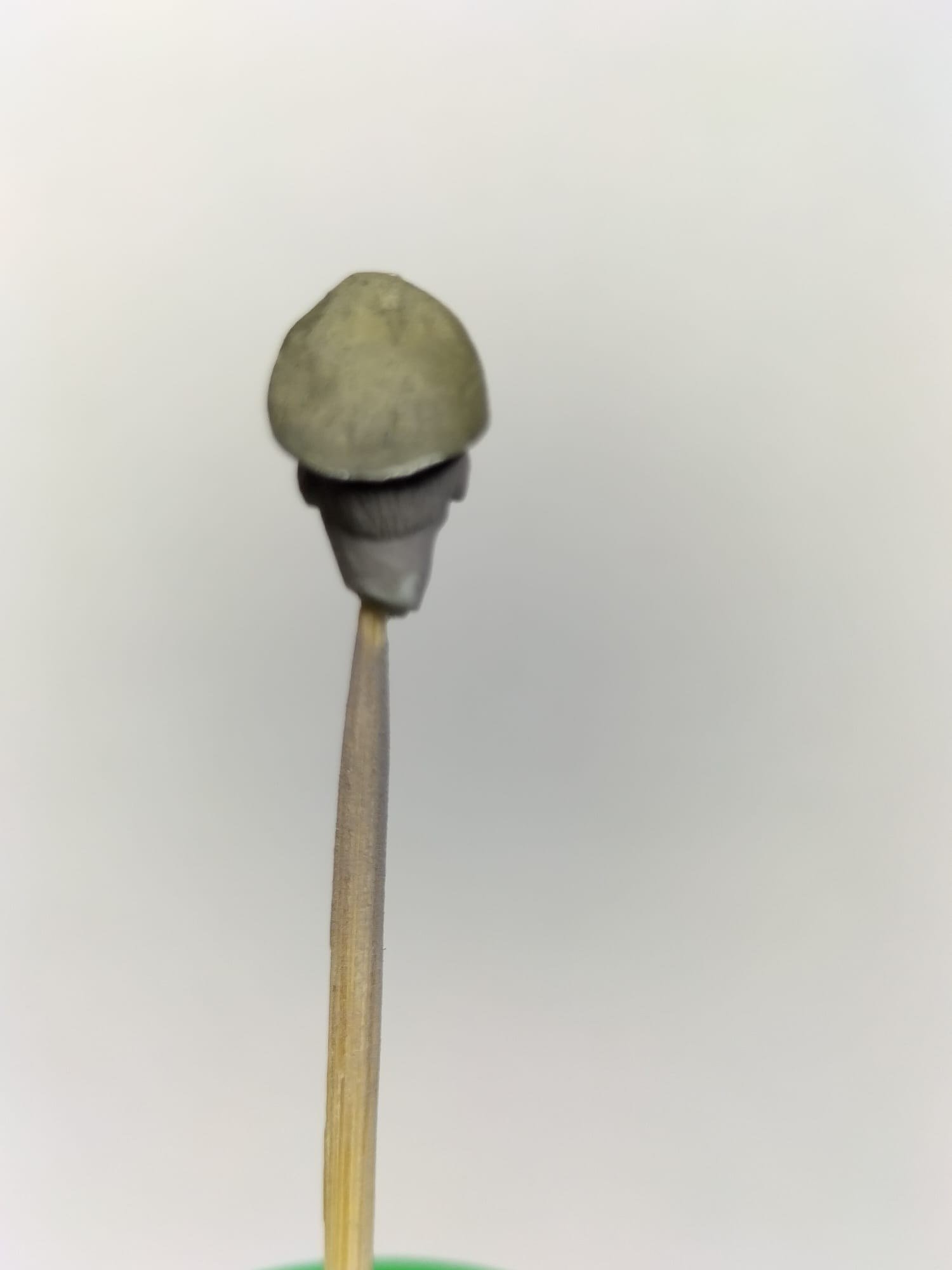
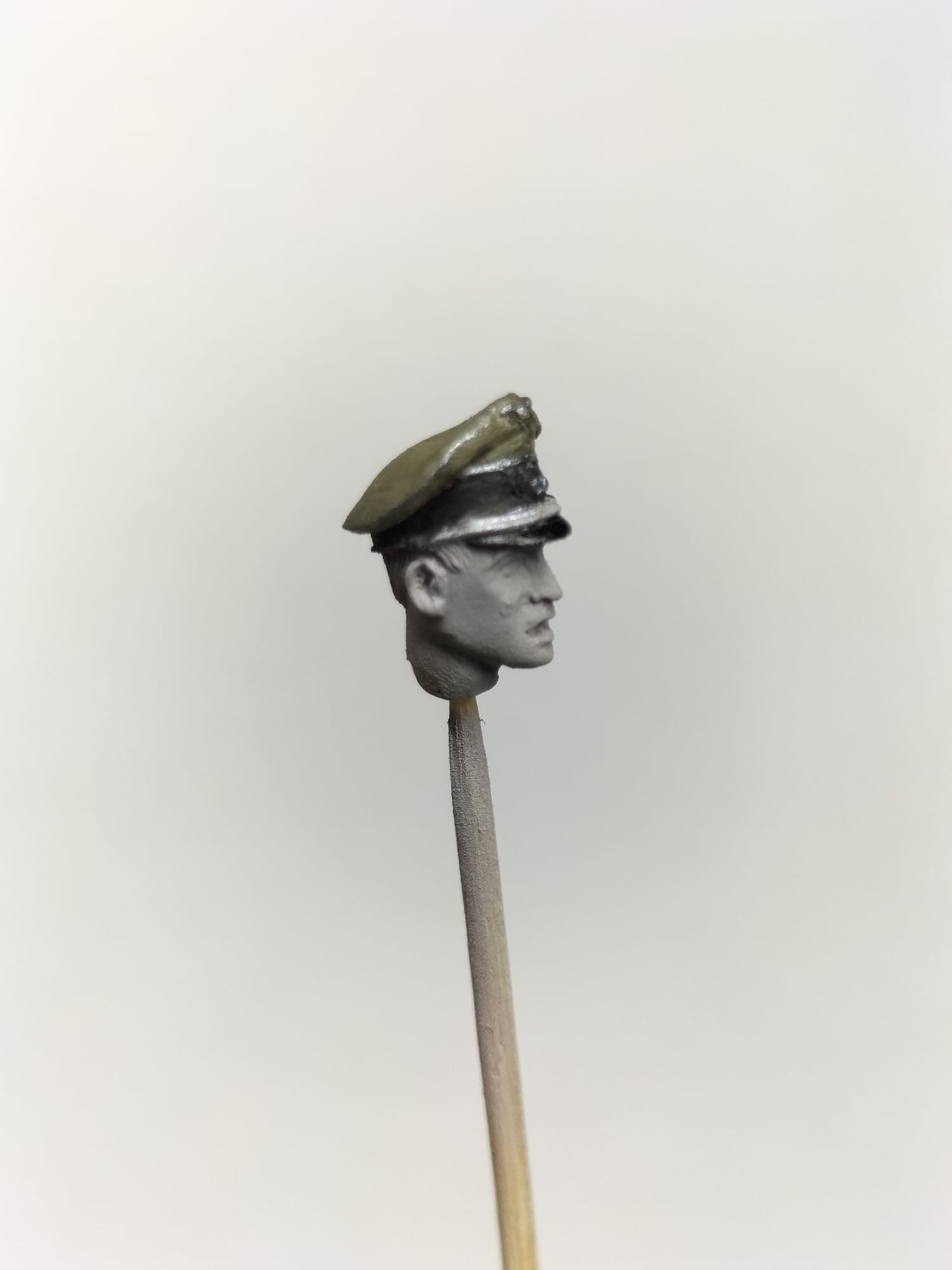
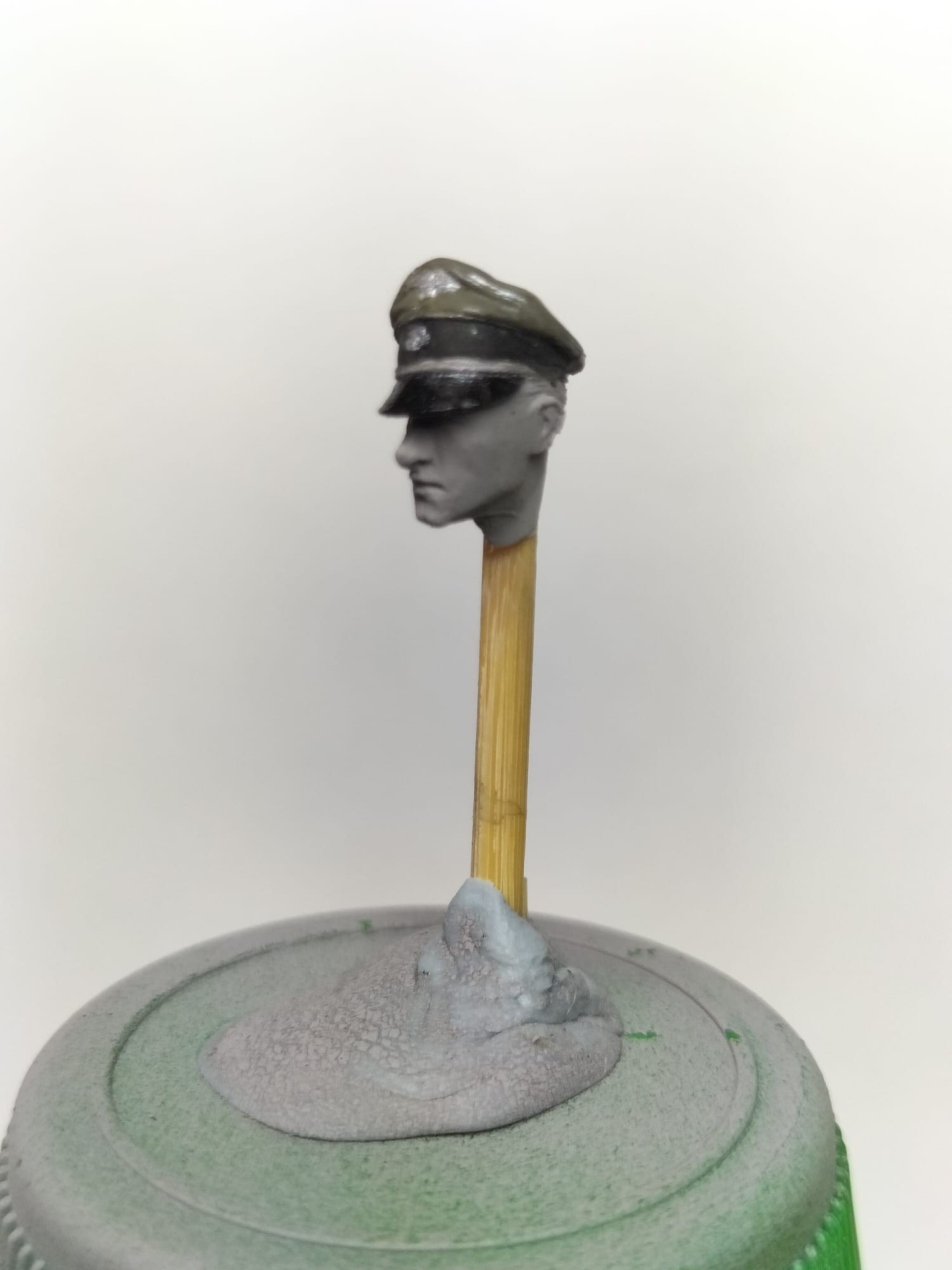
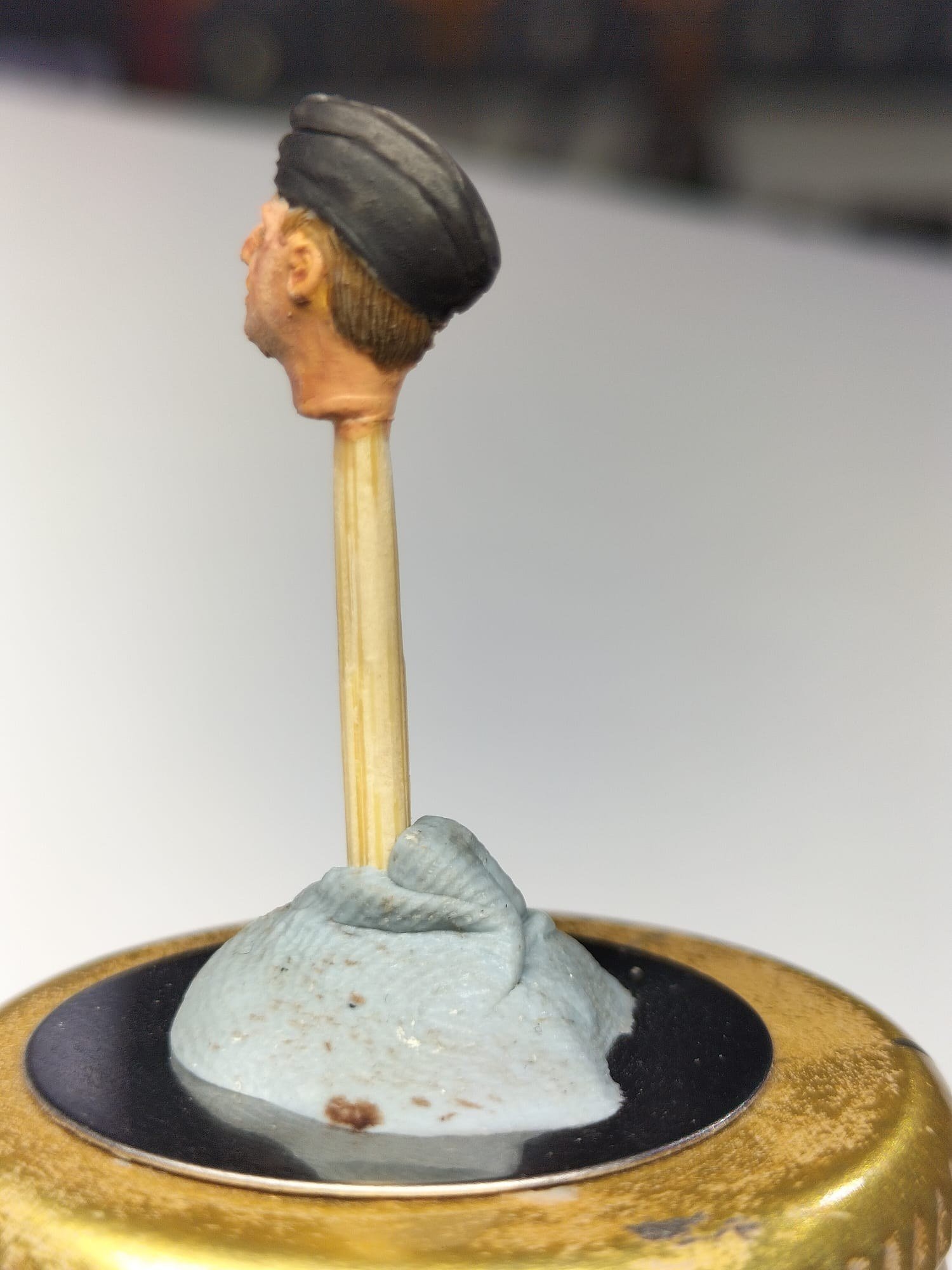
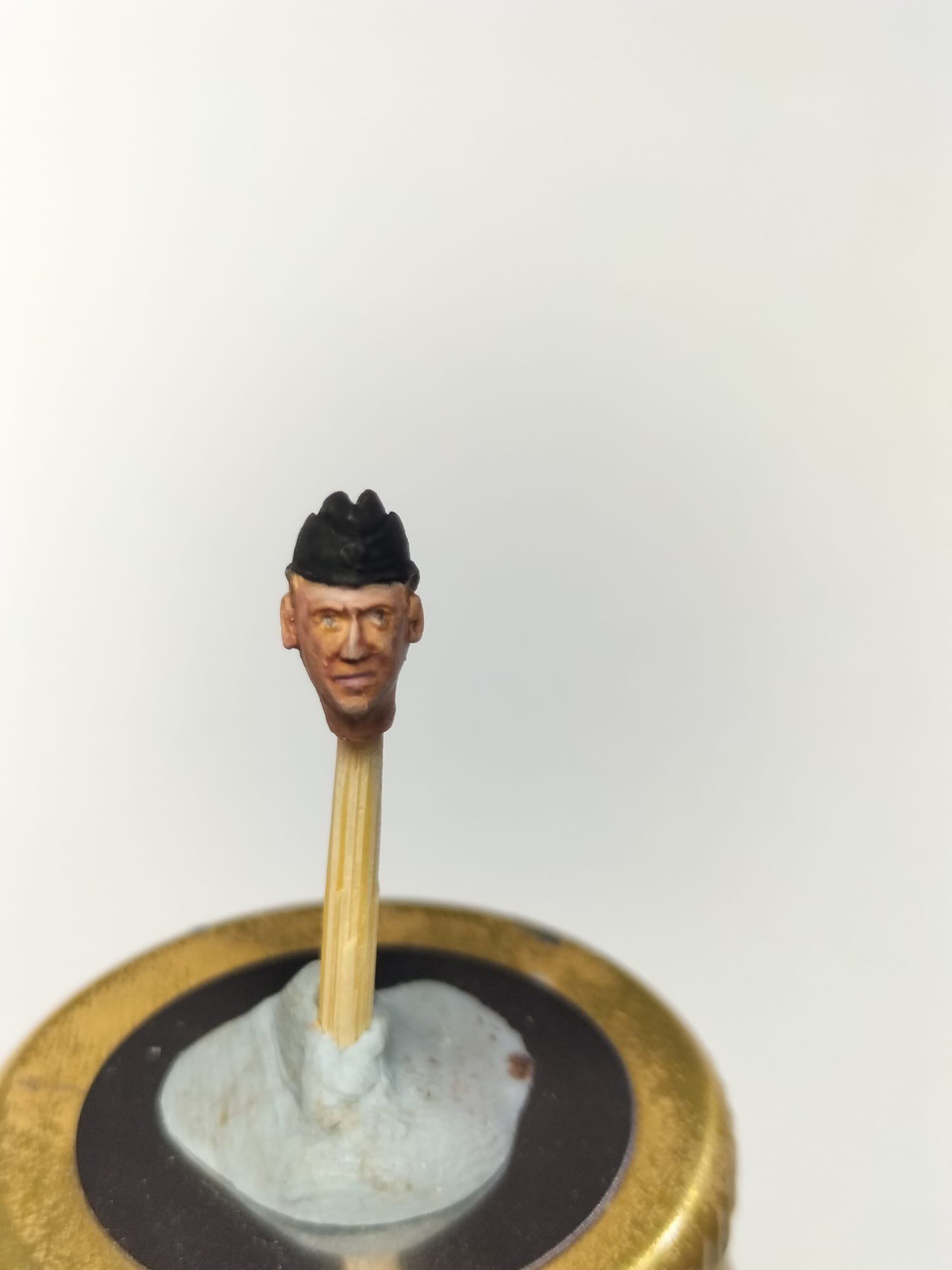
Each head is separated from the body and painted on its own, pinned to a cocktail stick: it is the only way to reach the eyes properly and to turn the face into the light. From bare resin to base flesh tone, shadows, eyes and cap. Four millimetres of face, and that is where a figure is won or lost.
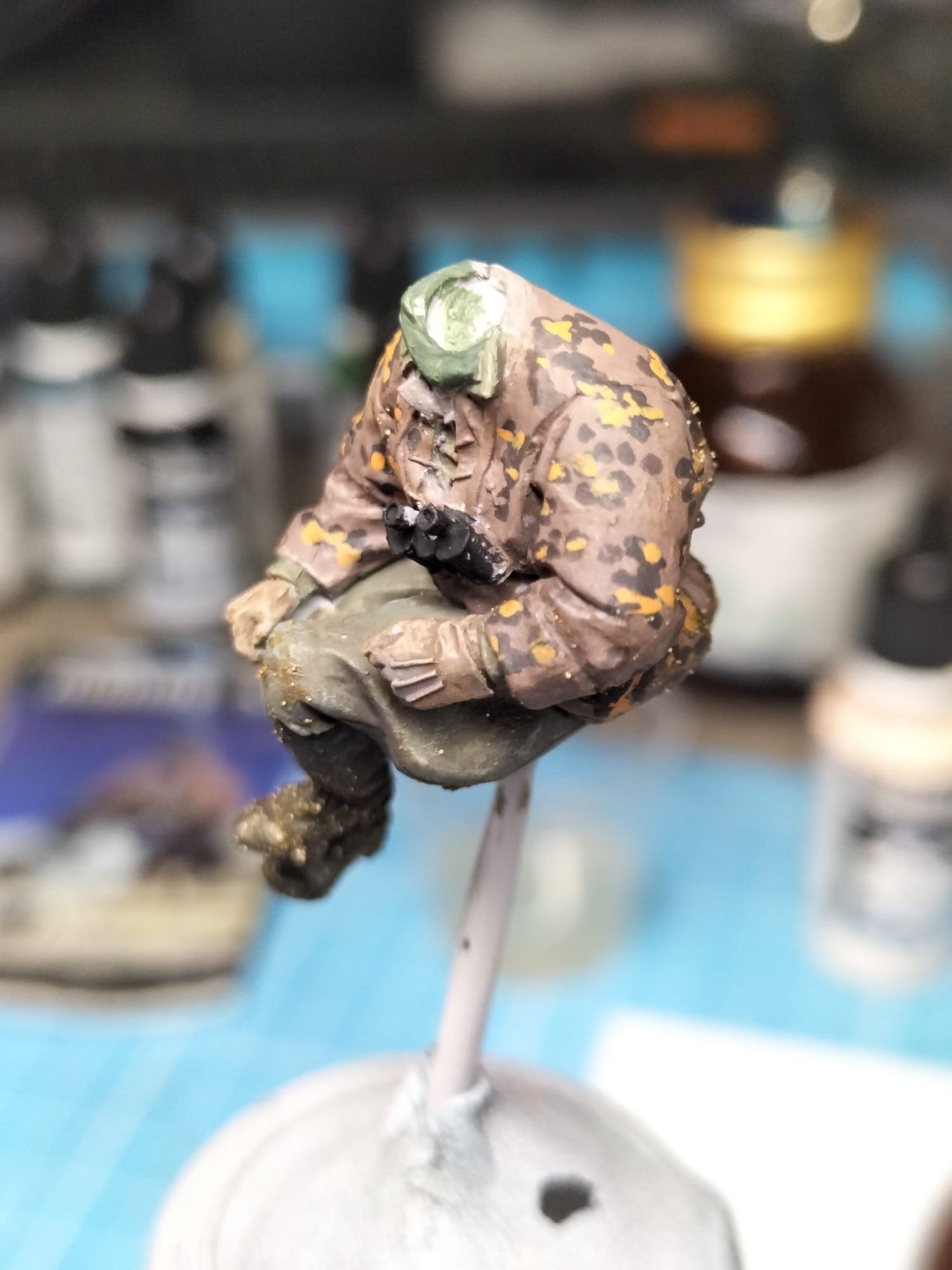
The figures: the rest of the crew

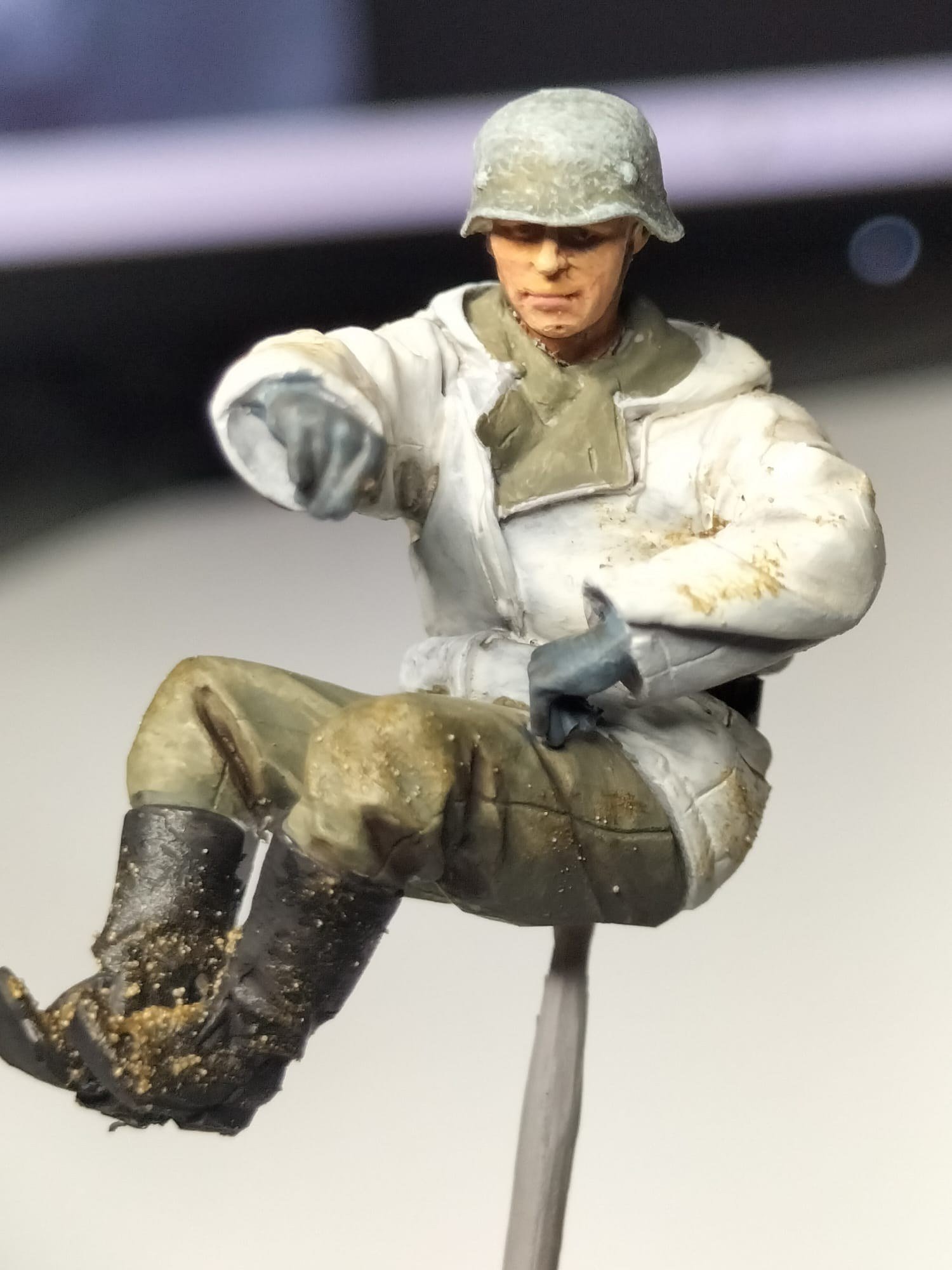
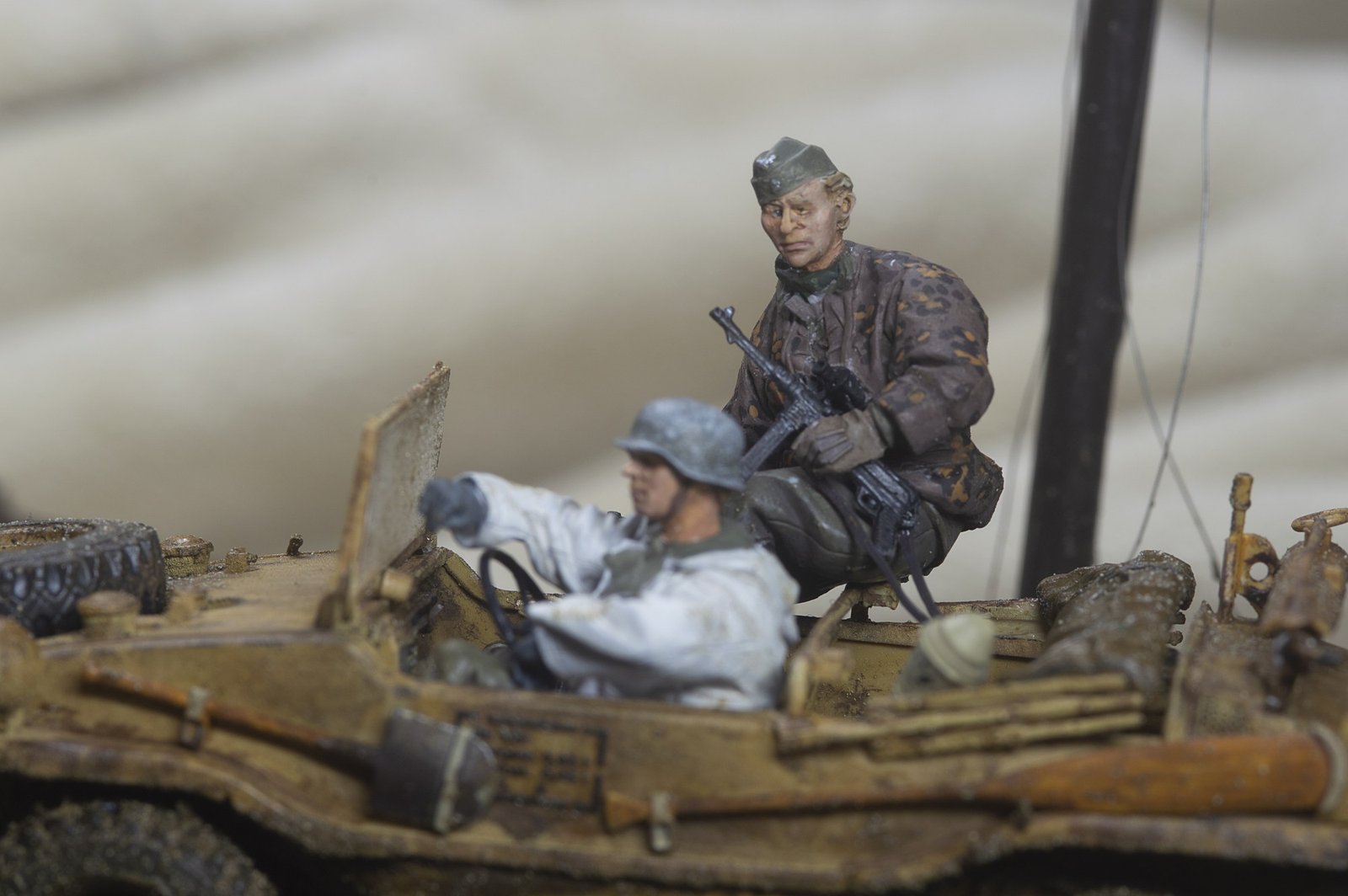
The second Königstiger crewman, sitting on the engine deck, and the Schwimmwagen pair: the driver in a white winter smock and the escort with the submachine gun. White is not painted white either — it is dirtied with earth and mud until it looks like clothing that has been worn through March.

The figures in place

Mounted on the tank and the car. This is where what actually matters gets checked: that the eyelines meet, that the poses tell a conversation, and that no figure hides another from the good viewing angles.

Gallery

Models included

Comments and questions

Share your thoughts or a question. Comments are reviewed before publishing; if you leave your email, it will not be shown.

← Back to the showcase